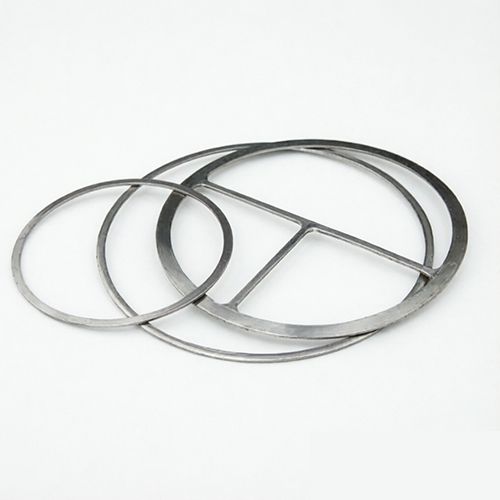

If you have ever faced a leaking flange in a high-pressure steam line or watched a heat exchanger gasket fail during a critical batch, you already know why sealing choice matters. What are kammprofile gaskets used for? In short, they are used to create reliable, long-lasting seals in flanged joints across refineries, chemical plants, power stations, and offshore platforms. A kammprofile gasket combines a serrated metal core—often stainless steel—with a soft sealing layer such as expanded graphite or PTFE. This design gives it blowout resistance, excellent recovery, and tolerance to temperature and pressure fluctuations. Maintenance teams and procurement specialists choose kammprofile gaskets when spiral wound gaskets are not strong enough or when jacketed gaskets cannot handle thermal cycling. At Ningbo Kaxite Sealing Materials Co., Ltd., we help engineers and buyers solve these exact problems with dimensionally stable kammprofile gaskets that reduce leakage, unplanned downtime, and inventory complexity. Below is a quick guide to the main sections in this article.
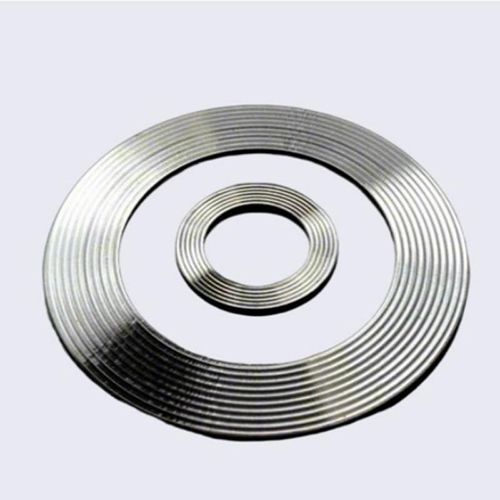
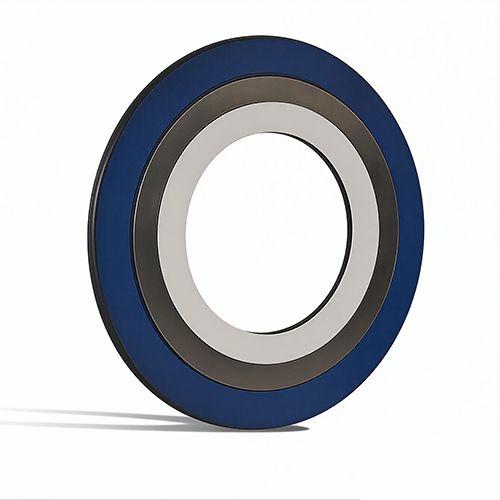
In a standard flanged connection, two uneven or thermally distorted surfaces can quickly turn a small gap into a leak path. This is a common pain point for maintenance engineers in refineries and chemical plants where process temperatures swing from ambient to several hundred degrees. A kammprofile gasket solves this by pairing a solid serrated metal core with a compressible sealing layer, usually expanded graphite, PTFE, or mica. The serrations create multiple concentric sealing rings that concentrate bolt load and grip the facing material. The soft layer fills surface imperfections and provides tightness even when flange pressure is not perfectly uniform. Because the metal core is not wound or wrapped like a spiral wound gasket, it resists blowout and remains dimensionally stable under high compressive stress. For buyers and reliability engineers, this means fewer leaks, fewer shutdowns, and more predictable maintenance intervals. When you specify the right core material, facing material, and flange standard, kammprofile gaskets deliver reliable sealing in services where conventional gaskets struggle.
Refinery turnaround coordinators often discover that multiple flange joints need resealing after just one thermal cycle. Heat exchangers, reactor flanges, and high-pressure steam headers are especially prone to this. What are kammprofile gaskets used for? They are widely used in these oil, gas, and chemical processing systems because their serrated metal core withstands aggressive media and their soft facing compensates for flange rotation and minor misalignment. For example, in a catalytic reforming unit, a graphite-filled kammprofile gasket can handle continuous temperatures above 400°C and still maintain a tight seal during shutdown cooling. The same gasket style is also used in heat exchangers, where differential expansion between shell and tube sides causes face movement. By replacing flat sheet gaskets or standard spiral wound designs with kammprofile gaskets, plants reduce fugitive emissions and avoid unscheduled maintenance. At Ningbo Kaxite Sealing Materials Co., Ltd., we produce kammprofile gaskets in a range of core materials including 316L, 304, Monel, and titanium to match specific chemical environments.
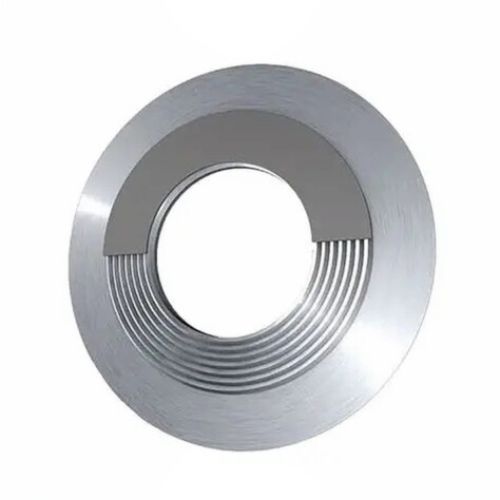
High-temperature steam systems, thermal oil loops, and hydrogen service flanges create some of the most demanding sealing conditions in modern plants. A common failure scenario begins when a standard graphite sheet gasket oxidizes or loses compression after repeated temperature cycles. The flange then leaks, forcing an unplanned shutdown. Kammprofile gaskets address this by using a metal core that acts as a structural spring. The serrations maintain load on the soft graphite layer even when the flange expands or contracts. This makes them suitable for steam turbine flanges, boiler feedwater lines, and high-pressure reactor closures. The table below gives typical application parameters for graphite-filled and PTFE-filled kammprofile gaskets.
| Parameter | Graphite-Filled Kammprofile | PTFE-Filled Kammprofile |
|---|---|---|
| Continuous temperature range | -200°C to 550°C | -200°C to 260°C |
| Pressure rating | Up to Class 2500 / PN 420 | Up to Class 1500 / PN 260 |
| Suitable media | Steam, hot oils, hydrocarbons, chemicals | Strong acids, solvents, oxygen-enriched service |
| Flange standards | ANSI/ASME B16.5, EN 1092-1, JIS B2220 | ANSI/ASME B16.5, EN 1092-1, JIS B2220 |
For procurement teams, matching the sealing layer to the process chemistry is just as important as the metal core. Ningbo Kaxite Sealing Materials Co., Ltd. can supply both graphite and PTFE configurations with standard or custom serrated profiles to match your flange dimensions.
Many maintenance buyers ask why they should switch from spiral wound gaskets to kammprofile gaskets. The answer often comes down to thermal cycling and flange surface damage. Spiral wound gaskets rely on a V-shaped metal strip and filler wound tightly together. Under severe thermal cycles, the windings can loosen or become damaged, especially on irregular or pitted flange faces. Jacketed gaskets, on the other hand, are limited by the mechanical strength of their outer metal shell and may not recover well after bolt load relaxation. Kammprofile gaskets combine the best of both: a solid serrated metal core for structural integrity and a soft facing for conformability. They are easier to handle and install than large spiral wound gaskets because they do not have loose windings or inner rings that can shift. In clean services such as steam, heat transfer fluids, and light hydrocarbons, this design reduces the risk of gasket blowout and helps plants meet emissions reduction targets.
Selecting the right kammprofile gasket starts with three data points: operating temperature, flange pressure class, and chemical media. A common mistake is to focus only on temperature and ignore the combined effect of pressure and aggressive media. For example, a 316L core with graphite facing works well in high-temperature steam but is not suitable for strong oxidizing acids. PTFE-faced kammprofile gaskets are preferred for acid service but have a lower upper temperature limit. To avoid leakage failures, procurement specialists should also confirm flange facing type, serration depth, and gasket dimensions against ASME B16.20 or EN 12560. The table below summarizes a simple selection logic.
| Service Condition | Recommended Core Material | Recommended Sealing Layer |
|---|---|---|
| Superheated steam, Class 600+ | 316L or 321 stainless | Graphite |
| Hot oil or heat transfer fluid | 316L or carbon steel | Graphite |
| Nitric or sulfuric acid | 316L or Monel | PTFE |
| Caustic or amine service | 316L or duplex | Graphite or PTFE |
Ningbo Kaxite Sealing Materials Co., Ltd. supports this selection process by providing material certificates, dimensional inspection reports, and dedicated technical advice for your flange standard.
Q: What are kammprofile gaskets used for in heat exchangers?
A: They are used to seal heat exchanger flanges, channel covers, and nozzle connections where thermal expansion causes flange face movement. The serrated metal core maintains bolt load, while the soft graphite or PTFE layer fills surface irregularities and prevents leakage during heating and cooling cycles.
Q: What are kammprofile gaskets used for in high-pressure piping systems?
A: In high-pressure piping, kammprofile gaskets are used on flanges that carry steam, hydrogen, hydrocarbons, and other critical media. They are chosen because the solid metal core resists blowout under pressure surges, and the controlled serration geometry ensures consistent gasket stress across the flange surface.
For purchasing managers, the biggest risk is not selecting a kammprofile gasket; it is receiving inconsistent gaskets from unverified suppliers. A slightly deeper or shallower serration, an incorrect graphite purity, or an out-of-tolerance inner diameter can cause installation issues and leaks. Ningbo Kaxite Sealing Materials Co., Ltd. removes this uncertainty by manufacturing kammprofile gaskets under strict quality control. We use CNC serration profiles, certified raw materials, and full traceability for each batch. Our team can cross-reference your flange drawings or international standards and deliver finished gaskets in standard or custom sizes. This helps you reduce inventory complexity and avoid costly field failures.
If you are currently comparing kammprofile gaskets for a specific flange standard, operating temperature, or chemical media, share your service conditions below or contact our sealing specialists directly—we can recommend a configuration that balances cost, availability, and leak-tightness.
At Ningbo Kaxite Sealing Materials Co., Ltd., we manufacture dimensionally accurate kammprofile gaskets, spiral wound gaskets, and custom sealing solutions for demanding industrial applications. Whether you need standard sizes or custom profiles, our engineering team can help you specify the right material and reduce seal-related downtime. Contact us at [email protected] for a quote or technical support.
Bouzid, A. H., & Champliaud, H. (2004). Contact stress evaluation of kammprofile gaskets. Journal of Pressure Vessel Technology, 126(4), 445-452.
Veiga, J. C., Cipolatti, D., & Sousa, A. M. (2017). Kammprofile gaskets: sealing performance under high temperature. Journal of Pressure Vessel Technology, 139(3).
Abid, M., & Nash, D. H. (2006). Comparative performance of gaskets in bolted flanged joints. International Journal of Pressure Vessels and Piping, 83(1), 31-39.
Fukuoka, T., & Nomura, M. (2013). Finite element analysis of serrated metal gaskets in flanged joints. Journal of Pressure Vessel Technology, 135(5), 051204.
Kobayashi, T., & Suzuki, K. (2015). Thermal cycling behavior of graphite-filled kammprofile gaskets. Journal of Pressure Vessel Technology, 137(1), 011202.
Brown, W., & Marchand, L. (2011). Leak tightness characteristics of spiral wound and kammprofile gaskets. Proceedings of the ASME Pressure Vessels and Piping Conference, PVP2011-57913.
Nagata, S., & Sawa, T. (2012). Sealing performance of PTFE-blended kammprofile gaskets. Journal of Pressure Vessel Technology, 134(2), 021202.
Jenco, J. M., & Hunt, E. S. (2000). Gasket selection for chemical process equipment. Chemical Engineering Progress, 96(4), 51-58.
Payne, J. R., & Schneider, R. W. (1999). Comparison of gasket constants for ASME code calculations. Journal of Pressure Vessel Technology, 121(1), 112-117.
Reddy, K. P., & Rao, S. S. (2018). Leakage prediction of metal-reinforced graphite gaskets for flanged joints. International Journal of Pressure Vessels and Piping, 162, 72-79.
-