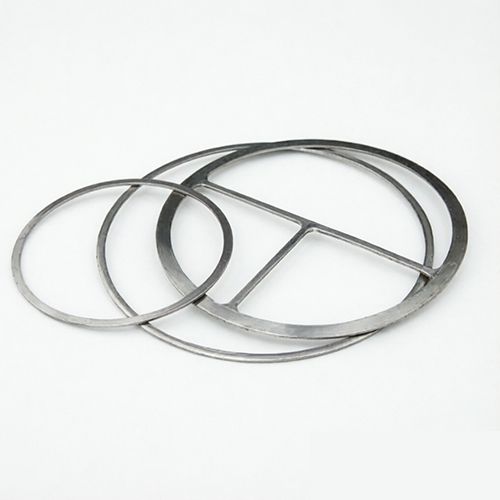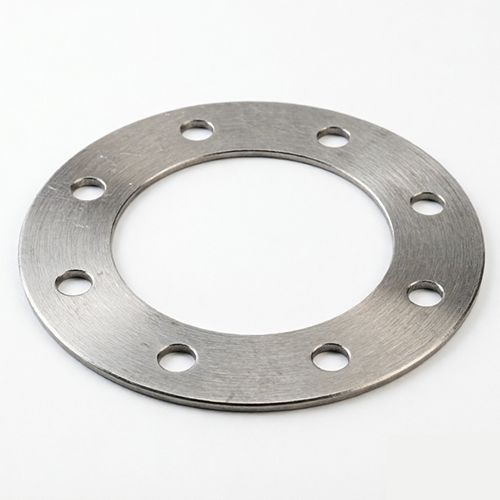
Metallic Gaskets are precision-engineered sealing components designed to withstand extreme temperatures, high pressures, and aggressive chemical environments where conventional soft gaskets fail. They are formed entirely or primarily from metal, offering exceptional dimensional stability, resistance to blowout, and long-term seal reliability. Kaxite Sealing specializes in manufacturing a comprehensive range of metallic gaskets for critical flange connections in oil and gas, petrochemical, power generation, pharmaceutical, and marine industries.
Metallic gaskets rely on controlled deformation of the metal under compressive load to create a leak-tight seal. The sealing mechanism depends on the gasket type, flange design, and surface finish. Some designs use concentric serrations, spiral windings, or soft filler materials to improve conformability. Kaxite Sealing manufactures both standard and custom configurations to match exact flange geometry, bolt load requirements, and process conditions.
The following parameters define the performance envelope of metallic gaskets supplied by Kaxite Sealing. All dimensions, tolerances, and material properties are verified through in-house quality control.
| Material | Maximum Temperature | Typical Hardness (HB) | Best Suited Environment |
|---|---|---|---|
| 304 Stainless Steel | 1,400°F | 150 max | General corrosive, oxidizing acids |
| 316L Stainless Steel | 1,400°F | 160 max | Chloride-bearing, marine, chemical |
| 321 Stainless Steel | 1,500°F | 170 max | High temperature oxidizing |
| 347 Stainless Steel | 1,500°F | 170 max | High temperature, sensitization resistant |
| Carbon Steel | 1,000°F | 120 max | Non-corrosive, low pressure |
| Duplex 2205 | 600°F | 290 max | High strength, chloride stress cracking resistant |
| Super Duplex 2507 | 600°F | 310 max | Severe chloride and sour service |
| Inconel 600 | 2,000°F | 195 max | High temperature oxidation, carburizing |
| Inconel 625 | 1,800°F | 220 max | Seawater, acids, high fatigue resistance |
| Inconel 718 | 1,300°F | 350 max | High strength, sour gas wellheads |
| Monel 400 | 900°F | 150 max | Hydrofluoric acid, marine, alkalies |
| Hastelloy C276 | 1,250°F | 220 max | Strong oxidizing and reducing acids |
| Titanium Grade 2 | 600°F | 160 max | Chloride, seawater, bleach |
| Nickel 200 | 1,500°F | 110 max | Caustic soda, chlorine, food processing |
| Alloy 20 | 1,000°F | 180 max | Sulfuric acid, phosphoric acid |
| Pressure Class | Maximum Working Pressure at 100°F | Maximum Working Pressure at 600°F | Maximum Working Pressure at 1,000°F |
|---|---|---|---|
| 150# | 285 psi | 140 psi | 75 psi |
| 300# | 740 psi | 360 psi | 195 psi |
| 600# | 1,480 psi | 720 psi | 390 psi |
| 900# | 2,220 psi | 1,080 psi | 585 psi |
| 1500# | 3,705 psi | 1,800 psi | 975 psi |
| 2500# | 6,170 psi | 3,000 psi | 1,625 psi |
| Standard | Size Range | Gasket Types Covered | Typical Tolerance |
|---|---|---|---|
| ASME B16.20 | 1/2 inch to 24 inch | Spiral wound, RTJ, metal jacketed | ID ±0.016 inch |
| ASME B16.47 Series A | 26 inch to 60 inch | Camprofile, spiral wound, flat metal | OD ±0.031 inch |
| ASME B16.47 Series B | 26 inch to 60 inch | Camprofile, spiral wound, flat metal | OD ±0.031 inch |
| API 6A | 1-13/16 inch to 30 inch | RTJ, BX, RX, lens | Seat angle ±0.5° |
| EN 1092-1 | DN 15 to DN 600 | Spiral wound, camprofile, flat metal | ID ±0.4 mm |
| DIN 2690 | DN 10 to DN 400 | Flat metal, corrugated metal | OD ±0.8 mm |
| JIS B2220 | 15A to 600A | Spiral wound, RTJ | ID ±0.4 mm |
Kaxite Sealing operates CNC machining centers, ring rolling machines, laser cutting systems, and hydraulic presses to produce metallic gaskets with repeatable accuracy. Each production batch is traceable through heat number, material test report, and dimensional inspection record. The company also provides positive material identification, hardness testing, and surface finish verification for critical applications.
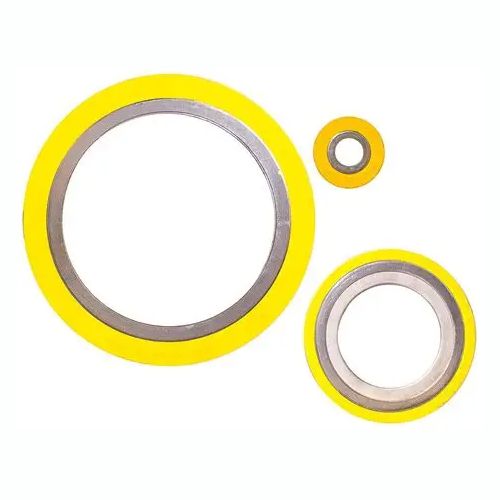
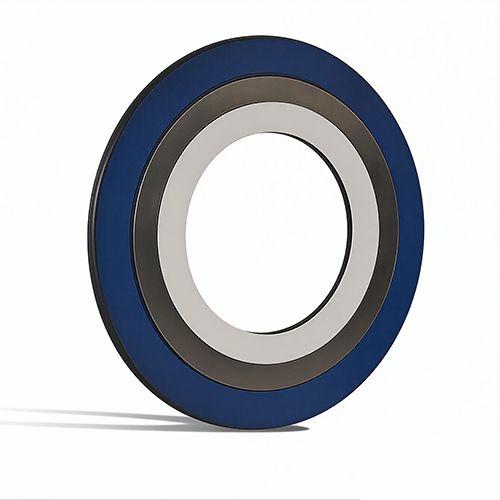
Spiral wound gaskets consist of a V-shaped metal strip wound alternately with a soft non-metallic filler such as flexible graphite, PTFE, or mica. They perform well under fluctuating temperatures and pressures, making them suitable for heat exchangers, piping systems, and pressure vessels. Kaxite Sealing supplies spiral wound gaskets with inner and outer rings to prevent over-compression and center the gasket on the flange face.
RTJ gaskets are solid metal rings designed for high-pressure API 6A and ASME B16.5 flanged connections. The ring seats into a machined groove on the flange face, creating a metal-to-metal seal that resists extreme pressure and thermal cycling. Kaxite Sealing produces style R, RX, and BX rings in oval and octagonal cross-sections with hardness controlled below the flange groove hardness to avoid damage.
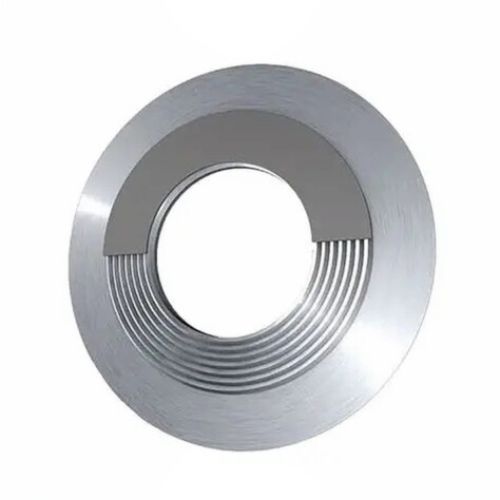
Camprofile gaskets combine a serrated solid metal core with a soft facing layer. The serrations concentrate bolt load on narrow contact points, increasing sealing stress without requiring excessive flange load. This type is ideal for heat exchangers where bolt load is limited. Kaxite Sealing offers camprofile gaskets with graphite, PTFE, or silver facings.
Metal jacketed gaskets feature a soft filler material completely enclosed in a metal shell. They are used in heat exchangers, autoclaves, and boiler handholes. Single jacket, double jacket, and corrugated jacket configurations are available. Kaxite Sealing forms jackets from stainless steel, copper, brass, nickel, and specialty alloys.
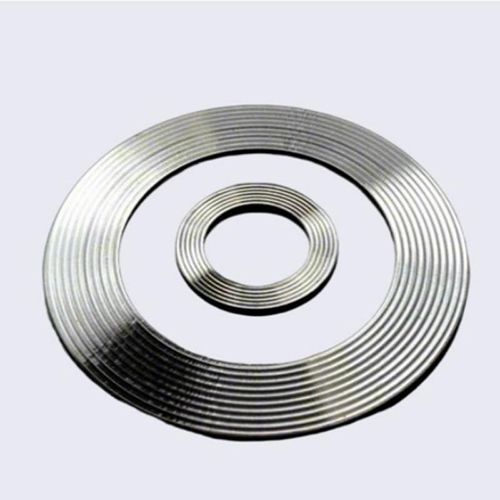
Corrugated metal gaskets are lightweight and flexible, with concentric corrugations that provide excellent recovery under cyclic loading. They are commonly used in large-diameter flanges, manways, and cover closures. Kaxite Sealing can supply bare corrugated gaskets or faced with graphite or PTFE for improved sealing.
Correct installation is essential to achieve rated performance from metallic gaskets. Kaxite Sealing recommends the following practices:
Kaxite Sealing supplies metallic gaskets to a wide range of industrial sectors. Each industry has unique requirements, and Kaxite Sealing adapts material selection, design, and documentation accordingly.
Q: What are the main advantages of metallic gaskets over non-metallic gaskets?
A: Metallic gaskets provide significantly better resistance to high temperature, high pressure, and chemical attack. They maintain dimensional stability under bolt load, resist blowout during pressure surges, and can be engineered to match specific flange face geometry. Unlike compressed fiber or rubber gaskets, metallic gaskets do not relax over time as severely and are less prone to creep in high-temperature cycling. They also offer a longer service life in critical equipment where frequent joint opening is not practical, reducing maintenance downtime and leak-related risks. Kaxite Sealing manufactures metallic gaskets with precise dimensional control, ensuring consistent sealing contact even in rugged industrial environments.
Q: What materials are commonly available for metallic gaskets?
A: Kaxite Sealing stocks and machines metallic gaskets from 304, 304L, 316, 316L, 321, 347 stainless steel, carbon steel, duplex 2205, super duplex 2507, Inconel 600, Inconel 625, Inconel 718, Monel 400, Hastelloy C276, Hastelloy B2, titanium Grade 2, nickel 200, nickel 201, and Alloy 20. The material choice depends on the process fluid, operating temperature, flange groove hardness, and corrosion resistance requirements. For sour service, Kaxite Sealing verifies compliance with NACE MR0175 and provides material test reports for each heat lot. Custom alloys are available on request.
Q: How do I choose the right metallic gasket for high-temperature applications?
A: Start by identifying the maximum continuous operating temperature, thermal cycling range, and flange pressure class. For temperatures up to 1,000°F, 316L stainless steel with flexible graphite filler is often sufficient. Above 1,000°F, Inconel 600 or Inconel 625 with mica filler provides better oxidation resistance and mechanical strength. For steam service up to 1,500°F, 321 or 347 stainless steel camprofile gaskets with graphite facing work well. Kaxite Sealing recommends evaluating the thermal expansion rate of the gasket material versus the flange material to minimize stress relaxation. In all cases, verify that the selected material retains adequate yield strength at the elevated temperature to maintain seating stress.
Q: What standards govern metallic gasket dimensions and tolerances?
A: The primary standards for metallic gaskets are ASME B16.20 for metallic gaskets used with ASME B16.5 and B16.47 flanges, API 6A for wellhead and Christmas tree equipment, EN 1092-1 for European flanges, and DIN 2690 for German piping systems. ASME B16.20 defines dimensions, tolerances, marking, and materials for spiral wound, ring joint, and metal jacketed gaskets. API 6A specifies RTJ ring dimensions, hardness limits, and pressure ratings for R, RX, and BX styles. Kaxite Sealing maintains dimensional compliance with all of these standards and can provide full material traceability and certificates of conformance.
Q: Can metallic gaskets be reused?
A: In general, solid metal RTJ gaskets and lens gaskets should not be reused after they have been compressed in a flange joint. The metal has permanently deformed to match the flange groove, and reuse can lead to insufficient seating stress, leakage, or flange damage. Spiral wound gaskets, once compressed, lose their resilient recovery and should also be replaced each time the joint is opened. Kaxite Sealing strongly advises against reuse of any metallic gasket in pressure-boundary applications. The cost of a new gasket is small compared to the potential risk of unplanned shutdown, product loss, or safety incidents.
Q: What surface finish is required for flange faces when using metallic gaskets?
A: The required flange surface finish depends on the metallic gasket type. Spiral wound gaskets typically require a flange surface finish of 125 to 250 microinches Ra. RTJ gaskets require the groove surface to be smooth and free of nicks, with a roughness of 63 microinches Ra or better. Camprofile gaskets work well with surfaces from 125 to 250 microinches Ra. If the flange face is too smooth, the gasket may not grip properly. If too rough, leakage paths can form. Kaxite Sealing provides surface finish recommendations for each gasket type and can evaluate flange condition using profilometer inspection.
Q: How does Kaxite Sealing ensure quality in custom metallic gaskets?
A: Kaxite Sealing follows a quality management system certified to ISO 9001, with additional controls for API 6A and NACE MR0175 applicable products. Every custom metallic gasket order begins with a detailed drawing review to confirm dimensions, materials, hardness, and marking requirements. During production, material test reports are verified against incoming heat lot certificates. Dimensional inspection uses calibrated CMM equipment, and hardness testing is performed on every RTJ and lens gasket. Kaxite Sealing also provides positive material identification using X-ray fluorescence analyzers. Final documentation includes material certificates, dimensional reports, hardness test results, and a certificate of conformance. This multi-step process ensures that custom metallic gaskets perform reliably under the most demanding conditions.
Q: What is the difference between spiral wound gaskets and ring type joint gaskets?
A: Spiral wound gaskets are semi-metallic gaskets made from a spiral wrap of metal strip and filler material. They are designed for standard ASME flanges, provide excellent recovery under thermal cycling, and require lower bolt load than solid metal gaskets. Ring type joint gaskets are solid metal rings that seal by seating into a machined groove in the flange. They are intended for high-pressure and high-temperature service, typically in API 6A or ASME B16.5 class 900 and above. RTJ gaskets create a metal-to-metal seal with no soft filler, making them extremely resistant to blowout but more sensitive to flange groove damage and requiring precise alignment. Kaxite Sealing manufactures both types and can help determine which configuration is best for a specific flange assembly and operating condition.