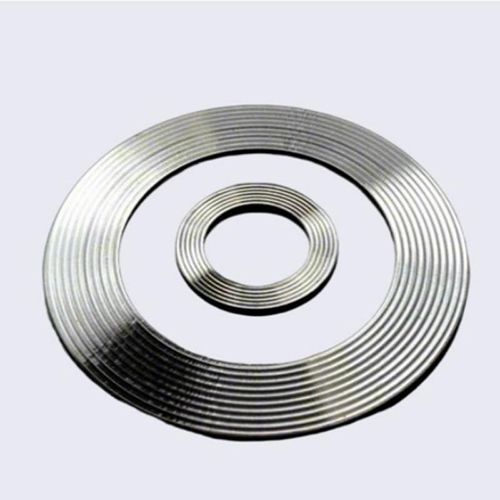

During a planned shutdown, a maintenance supervisor removes a jacketed metal gasket from a 12-inch heat exchanger flange. The part looks almost new, with only minor compression marks and no visible cracks. The immediate question from the crew is: Are Jacketed Metal Gaskets reusable? In high-temperature, high-pressure sealing systems, a jacketed metal gasket is not designed for multiple installations. The outer metal jacket yields plastically to fill flange surface imperfections, while the filler material supplies resilience. Once compressed, the gasket loses most of its elastic recovery. A reused unit may not generate the required seating stress, leading to slow leaks, fugitive emissions, or sudden blowout. From a procurement perspective, replacing a gasket is usually far cheaper than an unplanned shutdown. This page explains the mechanical limits, inspection criteria, and sourcing decisions that help you avoid the hidden costs of reusing jacketed metal gaskets. Use the quick navigation below to jump to specific sections.
Quick Navigation
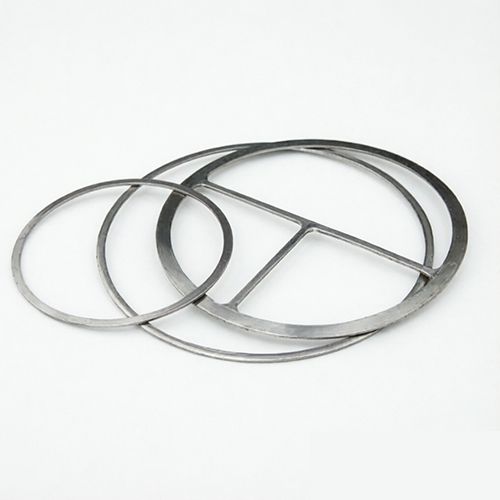
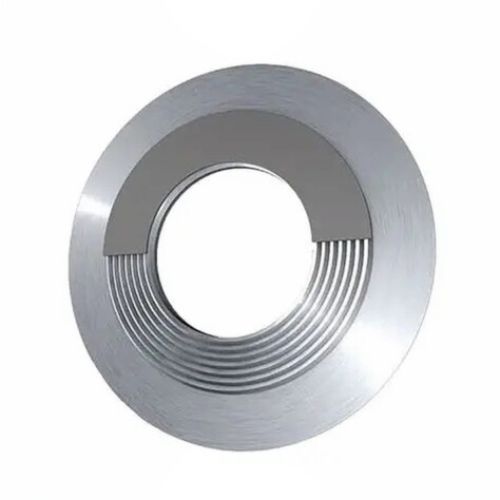
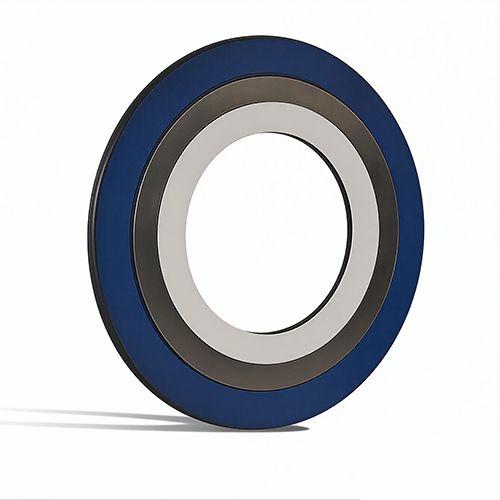
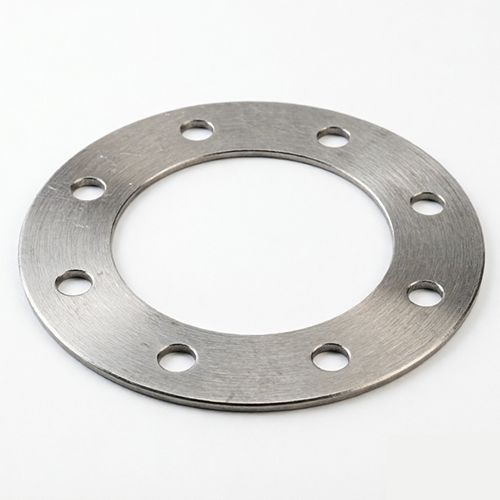
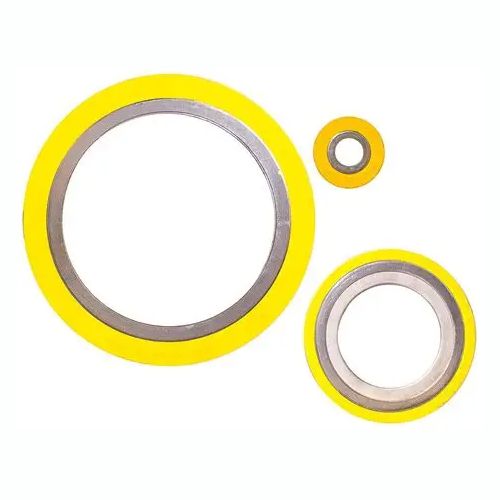
Jacketed metal gaskets combine a metallic outer shell with a soft, deformable filler—usually flexible graphite, PTFE, or ceramic fiber. The metal jacket protects the filler from extreme temperatures, pressure, and chemical attack, while the filler compensates for flange waviness. This hybrid design makes the gasket suitable for heat exchangers, autoclaves, boiler handholes, and other non-standard flanges where spiral wound or sheet gaskets cannot survive.
A common pain point for maintenance teams is selecting the right jacket and filler combination. Carbon steel jackets may handle boiler feedwater, but a 316L stainless steel jacket is needed for acidic services. Flexible graphite fillers offer excellent heat resistance, but they can promote galvanic corrosion on stainless flanges in wet environments. Choosing the wrong combination shortens gasket life and increases the temptation to reuse.
The solution is to specify the gasket based on full service conditions—temperature, pressure, media, and flange design—not just size and pressure class. The table below shows typical material combinations used in industrial plants.
| Jacket Material | Filler Material | Max Service Temp | Typical Application |
|---|---|---|---|
| 304 stainless steel | Flexible graphite | 450°C (842°F) | Steam lines, heat exchangers |
| 316L stainless steel | PTFE | 260°C (500°F) | Acids, corrosive chemicals |
| Monel | Flexible graphite | 480°C (896°F) | Marine, brine, alkali services |
| Nickel 200 | Ceramic fiber | 760°C (1400°F) | High-temperature flue gas, kilns |
The sealing action of a jacketed metal gasket depends on controlled plastic deformation. During initial tightening, the metal jacket yields and conforms to the flange surface. In a correct installation, the gasket remains under compression for thousands of hours, but the filler continues to creep and the jacket may take a permanent set. When the joint is opened, the gasket does not spring back to its original shape.
Pain point: plants often open a flange for inspection, then reassemble with the same gasket to avoid waiting for a new one. The reused gasket requires additional torque to seat because the jacket is already work-hardened. That extra bolt load can warp the flange, crush the filler, or create uneven stress distribution. The result is a joint that may pass a low-pressure hydro test but leak during thermal cycling or full operating pressure.
Solution: treat gasket replacement as part of every flange break. If a replacement is not available, perform a detailed inspection and derate the joint's accepting risk. The table below compares key performance indicators for new and used jacketed metal gaskets.
| Parameter | New Gasket | Reused Gasket |
|---|---|---|
| Compression set after relaxation | Less than 5% | 10%–35% depending on cycles |
| Bolt load retention after one week | 90%–95% | 60%–80% |
| Seating stress uniformity | High | Low to moderate |
| Leak risk under thermal cycling | Low | High |
| Typical procurement cost | US$8–US$120 per unit | Apparent saving, but downtime risk |
Jacketed metal gaskets fail differently from soft cut gaskets. The most dangerous failure is not a full break but a slow leak that remains unnoticed until process contamination or fire risk appears. Consider a steam heat exchanger that is opened for tube cleaning and reassembled with the same gasket. During startup, the thermal gradient causes the already deformed jacket to relax further. The joint begins to weep steam at 180°C, forcing the plant to shut down again. The cost of the gasket was under US$20; the cost of the second shutdown exceeded US$15,000.
Other common failure scenarios include filler squeeze-out, radial cracks in the metal jacket, and localized corrosion. Filler squeeze-out occurs when the reused jacket cannot contain the filler under recompression. Cracks form because the jacket material has passed its fatigue limit. Corrosion pitting on the jacket surface creates micro-leak paths even if the gasket looks intact.
Solution: perform a root-cause review before reusing any metal gasket. If the previous gasket showed signs of leakage or if the flange was opened due to an emergency, do not reuse. For planned turnarounds, order replacement gaskets in advance so the decision is never forced by schedule pressure.
From a purchasing standpoint, repeated gasket replacement appears to increase direct material spend. A facility may spend US$500 to refurbish 20 flange connections with new jacketed metal gaskets. Reusing those gaskets seems to save that amount. However, the total cost of ownership includes rework, lost production, environmental penalties, and safety incidents. One leaking flange on a hazardous chemical line can cost several thousand dollars per hour in downtime alone.
Pain point: procurement teams are often measured on purchase order value, not mean time between failures. This creates pressure to reuse expensive large-diameter jacketed metal gaskets, particularly if lead times are long. A 24-inch gasket with a Monel jacket may cost several hundred dollars, but a leak can shut down an entire production unit.
Solution: compare the cost of a new gasket against the estimated cost of a leak. Use a simple risk matrix that includes media hazard, operating temperature, pressure, and flange history. The table below gives a conservative comparison.
| Scenario | Reuse Saving | Potential Leak Consequence | Net Risk |
|---|---|---|---|
| Steam utility line | $12 | 4-hour downtime, $8,000 | Replace |
| High-pressure reactor | $85 | 12-hour shutdown, $45,000 | Replace |
| Non-critical water line | $8 | Minor leak, $200 cleanup | Limited reuse possible if inspection passes |
| Corrosive acid line | $40 | Environmental fine, $25,000+ | Replace |
If a plant absolutely must consider reusing a jacketed metal gasket, a structured inspection is mandatory. The inspection should be performed in good lighting after the gasket has cooled and before any cleaning or wire brushing. The evaluator should check for radial cracks, filler loss, jacket thinning, pitting, and uneven compression marks. The gasket should be compared with a new sample of the same size and material.
Pain point: field technicians often make reuse decisions based on a quick visual check. Hairline cracks are easy to miss when the gasket is covered with process residue. Filler squeeze-out may be hidden under the jacket lip. Without measurement tools, the decision becomes a guess.
Solution: use a written checklist with pass/fail thresholds. Where possible, measure jacket thickness with a micrometer at multiple points around the circumference. If any single point fails, replace the gasket. The table below outlines a practical inspection guide.
| Check Point | Acceptable Condition | Action if Failed |
|---|---|---|
| Radial cracks in outer jacket | None visible | Replace |
| Filler extrusion beyond jacket edge | None | Replace |
| Surface pitting or corrosion depth | Less than 0.1 mm | Replace if deeper |
| Jacket thickness reduction | Less than 10% of new thickness | Replace |
| Compression marks on jacket | Uniform ring only | Replace if uneven |
| Diameter distortion | Less than 0.5 mm | Replace |
There are a few low-risk situations where a jacketed metal gasket may be reused after a careful inspection, but these are exceptions rather than normal practice. A low-pressure water flange operating below 50°C and 6 bar may tolerate a reused gasket if the original compression was light and the jacket remains fully intact. However, the gasket must never be reused in flammable, toxic, or high-energy services.
Pain point: plants often extend reuse from low-risk water lines to steam or hydrocarbon lines because “the gasket looks the same.” This is where incidents happen. A gasket that worked on a cooling water flange may fail instantly on a steam line because the thermal expansion rate and seating stress requirements are completely different.
Solution: define written reuse rules in your plant's flange management procedure. Limit reuse to the conditions shown in the table below, and require engineering approval for anything outside those limits. Even then, the responsible engineer should confirm that the gasket conforms to the original material certification and has been stored flat and clean.
| Condition | Reuse Acceptable? | Notes |
|---|---|---|
| Water service below 50°C, below 6 bar | Yes with inspection | Non-critical only |
| Steam, thermal oil, or hydrocarbon | No | Replace all jacketed gaskets |
| Toxic or flammable media | No | Replace all jacketed gaskets |
| Vacuum service | No | Leak paths cause contamination |
| Flange opened for emergency repair | No | Unknown overload history |
Ningbo Kaxite Sealing Materials Co., Ltd. supplies new jacketed metal gaskets that reduce the temptation to reuse. The company manufactures gaskets from certified metal jackets and high-purity filler materials, with strict dimensional control and full traceability. This matters because one of the main reasons plants reuse gaskets is slow replacement sourcing. Long lead times for large-diameter or exotic-alloy gaskets force maintenance teams to reassemble with used parts. Kaxite solves this by offering fast production cycles for standard and custom sizes, including 304, 316L, Monel, and Nickel jackets.
The company also helps buyers avoid overpaying for unnecessary specs. By reviewing flange design and service conditions, Kaxite can recommend the correct material combination and cross-section, which extends service life and lowers total sealing cost. Each order can include dimensional reports, material certificates, and surface finish checks. This documentation supports your plant's pressure equipment integrity program and makes the reuse decision unnecessary.
For high-cycle services, Kaxite can supply alternative sealing profiles that offer better recovery than traditional jacketed metal gaskets. This is a better long-term solution than trying to stretch the life of a used gasket. The goal is not only to answer “Are jacketed metal gaskets reusable?” but to make sure your operation has a dependable supply of new, correctly specified gaskets before every scheduled shutdown.
Q1: Are jacketed metal gaskets reusable after a thermal cycle?
A: Generally no. A thermal cycle causes the metal jacket and filler to expand and contract at different rates. The jacket may develop microscopic cracks or lose additional spring-back even if no damage is visible. In steam, thermal oil, or hydrocarbon service, a reused jacketed metal gasket after a thermal cycle presents an unacceptable leak risk. Replace it.
Q2: Are jacketed metal gaskets reusable if there is no visible damage?
A: Not necessarily. Visible inspection cannot detect work hardening, loss of elastic recovery, or micro-cracks under the metal jacket. A gasket that looks clean and intact may still fail to generate the required seating stress. Reuse should only be considered in low-pressure, non-critical water services and only after a full inspection with thickness and distortion checks. For process-critical flanges, new gaskets are the safe choice.
Need a reliable sealing partner for your next turnaround? Rather than risk a reused jacketed metal gasket, source new units from Ningbo Kaxite Sealing Materials Co., Ltd. We supply jacketed metal gaskets in standard and custom sizes, with certified materials and documented quality control. Visit https://www.metal-gaskets.com for product specifications, or contact our engineering team at [email protected] to review your flange conditions. We help you eliminate guesswork and keep your sealing systems leak-free.
Abid, M., & Hussain, S. (2008). Gasketed joint relaxation behavior under bolt up and internal pressure. Journal of Pressure Vessel Technology, 130(3), 031203.
Abid, M., & Khan, K. A. (2004). Determination of optimized bolt stress of gasketed joint. International Journal of Pressure Vessels and Piping, 81(3), 269–275.
Bouzid, A. H., & Chaaban, A. (1993). An accurate method of evaluating relaxation in bolted flanged connections. Journal of Pressure Vessel Technology, 115(1), 10–17.
Bouzid, A. H., & Nechache, A. (2007). The effect of creep relaxation on the leak tightness of bolted flanged joints. Journal of Pressure Vessel Technology, 129(4), 700–706.
Fukuoka, T., & Takaki, T. (2001). Finite element analysis of the mechanical behavior of pipe flange connections. Journal of Pressure Vessel Technology, 123(4), 526–532.
Kobayashi, T., & Hamano, M. (2000). Sealing performance of metal gaskets under thermal cycling. Nuclear Engineering and Design, 195(2), 171–178.
Nagata, S., & Shoji, Y. (1999). Sealing performance of flexible graphite gaskets. Journal of the Society of Materials Science, Japan, 48(5), 477–481.
Payne, J. R. (1987). Metal-jacketed gaskets for elevated temperature service. Chemical Engineering Progress, 83(8), 45–49.
Sawa, T., & Shimizu, A. (2000). The sealing performance of metal gaskets. ASME Pressure Vessels and Piping Conference, 405, 91–97.
Zerres, H., & Guérout, S. (2015). Leak rate prediction for bolted flanged joints with metal jacketed gaskets. ASME Pressure Vessels and Piping Conference, PVP2015-45036.
-