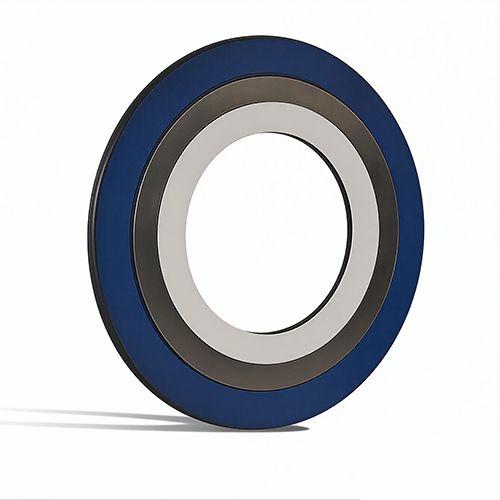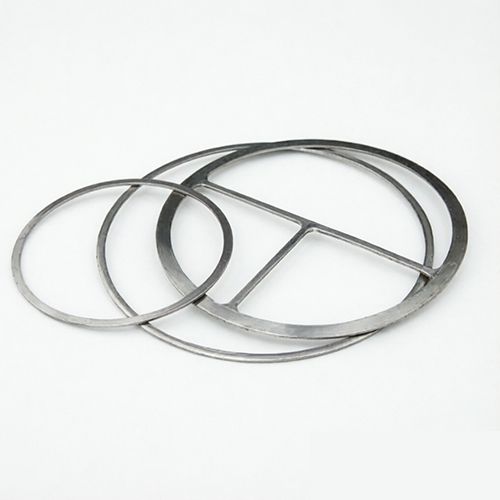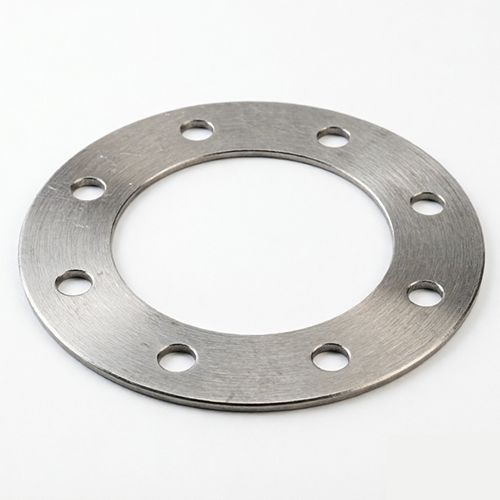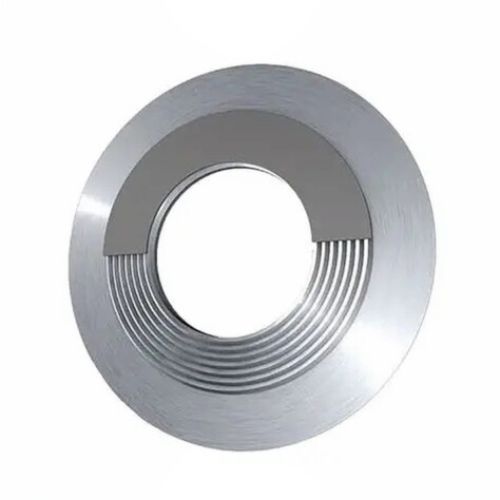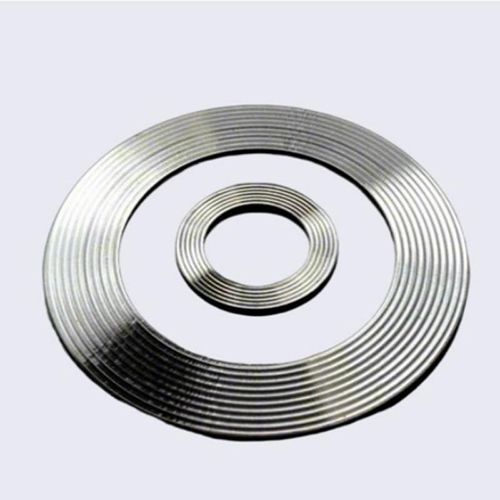

What Are Ring Type Joint Gaskets and Where Are They Used? Imagine a gas compressor station at 3 a.m. A flange joint on a high-pressure line starts leaking because the gasket was not hard enough to seat properly. The maintenance team scrambles, production stops, and procurement gets an urgent call. This scenario is common in oil and gas, refining, and chemical processing when the wrong ring type joint gasket is selected. Ring type joint gaskets, also called RTJ gaskets, are metallic seals that fit into a machined groove on a flange face. When bolts are tightened, the gasket deforms and fills the groove, creating a high-integrity metal-to-metal seal. They are used in API 6A wellhead equipment, ASME B16.5 flanges, pipelines, valves, and heat exchangers. For buyers, understanding material, style, and hardness prevents failures before they happen. This guide gives you the practical knowledge to specify RTJ gaskets with confidence, and shows how Ningbo Kaxite Sealing Materials Co., Ltd. can be your reliable sourcing partner.
Understanding Ring Type Joint Gaskets: Construction and Function
Common Applications and Industry Pain Points
How Procurement Teams Can Avoid Seal Failures
Material Selection and Specification Table
Two Common Questions About Ring Type Joint Gaskets
In most production environments, leakage is not just a maintenance issue—it is a safety and budget issue. A ring type joint gasket works differently from a flat sheet gasket. It is a solid metal ring, usually octagonal or oval in cross-section, designed to fit into a matching groove on a flange face. When you tighten the flange bolts, the gasket is compressed into this groove. The metal yields slightly and forms a tight, self-energized metal-to-metal seal. This design handles extreme pressures, thermal cycling, and aggressive fluids much better than conventional gaskets.
There are three main styles: R, RX, and BX. R style gaskets are used in standard ASME B16.5 and API 6B flanges. RX and BX styles are common in API 6A wellhead and Christmas tree equipment. Each style has specific dimensional and hardness requirements, so a gasket that fits one flange standard may not be safe in another. Procurement teams often discover this only after a leak occurs, which is why early specification review saves thousands of dollars.
Ningbo Kaxite Sealing Materials Co., Ltd. keeps these differences at the center of every order. When you share your flange standard, pressure class, and medium, the team helps you select the right style and material before production begins.
Ring type joint gaskets are the standard choice wherever process media is too hot, too corrosive, or too high-pressure for a soft gasket. Typical applications include upstream wellheads, subsea trees, production manifolds, refinery hydrotreaters, gas transmission pipelines, and high-pressure valve bonnets. In these environments, a leak can trigger emergency shutdown, environmental penalties, and unplanned maintenance costs.
A common pain point for buyers is receiving gaskets that pass a visual check but fail during hydrostatic testing because the hardness is too close to the flange hardness or the material certificate is missing. Another issue is long lead times for exotic alloys, which can delay a turnaround by weeks. These problems are avoidable when the gasket supplier maintains strict traceability and stocks common RTJ styles.
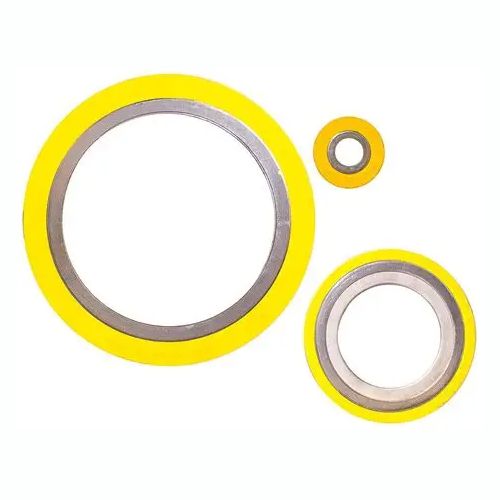
For example, a buyer in the Middle East needed Inconel 825 RTJ gaskets for a sour gas compressor station. The original supplier could not provide full material traceability, so the project was at risk. Ningbo Kaxite Sealing Materials Co., Ltd. supplied dimensionally inspected gaskets with EN 10204 3.1 certificates and on-time delivery, avoiding a costly shutdown.
Procurement teams often face a difficult trade-off: choose the cheapest RTJ gasket or pay more for quality assurance. In high-pressure service, the cheapest option can become the most expensive decision. A single flange leak can cost more than a year of gasket purchases in lost production and repair labor. The real solution is not just buying a higher-priced product; it is buying from a supplier that understands flange standards, hardness matching, and material traceability.
Before placing an order, verify these points: confirm the gasket style matches your flange standard, request the hardness range for the material, and ask for a material test certificate. For API 6A applications, the gasket should meet the dimensional and marking requirements of API 6A. For ASME B16.20 pipe flanges, the gasket should comply with ASME B16.20. If your service is sour, request NACE MR0175 compliance for the material.
Ningbo Kaxite Sealing Materials Co., Ltd. removes this burden by providing pre-shipment inspection documents, hardness reports, and full material traceability. This allows procurement teams to audit quality without needing to visit the factory, which shortens the supplier qualification cycle and reduces risk.
Material choice is one of the most common reasons for RTJ gasket failure. The gasket must be softer than the flange material by a controlled amount. If it is too hard, it will not deform enough to create a seal. If it is too soft, it may extrude under pressure or corrode too quickly.
The table below summarizes typical material options for ring type joint gaskets. Use it as a starting point, but always confirm with your engineering team or gasket supplier.
| Material | Maximum Hardness (HB) | Maximum Temperature (°C) | Typical Service |
|---|---|---|---|
| Soft Iron | 90 | 450 | Low-pressure, non-corrosive general service |
| Low Carbon Steel | 120 | 500 | Standard oil and gas, non-sour |
| F5 | 130 | 600 | Sour service, moderate corrosion |
| 316L Stainless Steel | 160 | 650 | Corrosive chemicals, offshore topside |
| Inconel 825 | 180 | 700 | High-chloride, high-temperature wells |
Always verify that the material is compatible with your process fluid, operating temperature, and pressure class. A gasket that works in a standard refinery flange may not survive in a CO2 injection well. When in doubt, share your full service conditions with Ningbo Kaxite Sealing Materials Co., Ltd., and the technical team will recommend a gasket with the right balance of hardness, corrosion resistance, and cost.
Q: What Are Ring Type Joint Gaskets and Where Are They Used?
A: Ring type joint gaskets are solid metal seals installed in grooved flanges. They are used primarily in high-pressure, high-temperature systems such as API 6A wellheads, ASME B16.5 pipe flanges, refinery process units, subsea manifolds, and high-pressure valves. Their metal-to-metal contact prevents leakage under conditions where soft gaskets would fail.
Q: What are the key differences between octagonal and oval ring type joint gaskets, and where is each used?
A: Octagonal RTJ gaskets have flat sealing surfaces and are easier to seat, making them the preferred choice for modern high-pressure flanges. Oval RTJ gaskets have rounded contact surfaces and are sometimes used in older flange designs or where the groove has minor surface irregularities. Both are used in oil and gas applications, but octagonal gaskets are more common in new API 6A and ASME B16.20 specifications. The selection depends on the flange groove geometry, not just the gasket style.
For procurement specialists, supplier reliability is just as important as product specifications. Ningbo Kaxite Sealing Materials Co., Ltd. focuses on Metallic Gaskets and understands the international standards that govern ring type joint gaskets. The company serves oil and gas, petrochemical, power generation, and marine industries with API 6A, ASME B16.20, and custom-engineered gaskets.
Instead of waiting weeks for custom alloy gaskets, buyers can work with a manufacturer that maintains raw material inventory and provides same-day quotation support. The quality system includes dimensional checks, hardness testing, and material certification for every lot. This directly solves the two biggest procurement pain points: inconsistent quality and delayed deliveries.
If you are ready to simplify RTJ gasket sourcing, partner with Ningbo Kaxite Sealing Materials Co., Ltd.. We manufacture and export ring type joint gaskets in soft iron, low carbon steel, stainless steel, and exotic alloys. Our team supports material traceability, hardness testing, and dimensional inspection to help you avoid costly seal failures. Contact us at [email protected] for a same-day quotation or technical recommendation.
Bickford, J. H. (2020). Introduction to the Design and Behavior of Bolted Joints. Mechanical Engineering Series, 4th ed.
Nash, D. H., & Abid, M. (2019). Surface Contact Stress Analysis of Ring Type Joint Gaskets. International Journal of Pressure Vessels and Piping, 170, 45-53.
Zhu, L., & Bouzid, A. H. (2018). Effect of Gasket Hardness on the Sealing Performance of RTJ Flanged Joints. Journal of Pressure Vessel Technology, 140(5), 051204.
Mathan, G., & Prasad, N. S. (2017). Finite Element Evaluation of Oval and Octagonal Ring Joint Gaskets under High Pressure. Procedia Engineering, 173, 1234-1241.
Sawa, T., & Takagi, Y. (2016). Sealing Performance of Metallic Gaskets in Bolted Flange Connections under Thermal Cycling. Journal of Pressure Vessel Technology, 138(2), 021202.
Brown, W. (2015). Ring Type Joint Gasket Selection for Sour Service in Oil and Gas Production. Corrosion Engineering Science and Technology, 50(4), 278-286.
Kim, J., & Lee, S. (2014). Experimental Study on the Leakage Behavior of RTJ Gaskets in High-Pressure Flange Joints. Journal of Mechanical Science and Technology, 28(9), 3541-3548.
Müller, K., & Schmidt, R. (2013). Material Compatibility of Ring Joint Gaskets for High Pressure High Temperature Applications. Materials and Corrosion, 64(7), 601-608.
Chen, X., & Wang, Y. (2012). Hardness Matching Criteria for RTJ Gaskets in Bolted Flange Connections. Engineering Failure Analysis, 25, 144-152.
Omiya, Y., & Kobayashi, T. (2010). Evaluation of Sealing Performance of Metal Ring Joint Gaskets under Internal Pressure and Bending. Journal of Pressure Vessel Technology, 132(6), 061202.
-