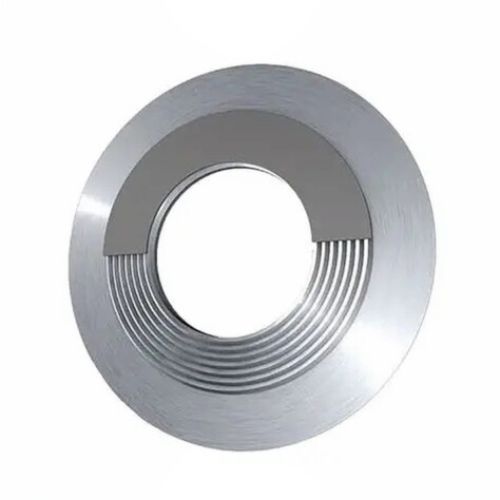

Every procurement manager knows the frustration of sealing failures in high-pressure piping systems. Spiral Wound Metal Gaskets sit at the heart of many critical joints, yet few buyers understand exactly how these sealing components are built. How are spiral wound metal gaskets manufactured? The answer directly affects leak rates, maintenance costs, and plant downtime. A poorly made gasket may look identical to a premium one but fail within months. In this guide, we break down the manufacturing process, explain common failure points, and show how Ningbo Kaxite Sealing Materials Co., Ltd. eliminates these risks through controlled production and material traceability. Whether you source for oil and gas, chemical processing, or power generation, this article gives you a clear framework to evaluate suppliers and avoid costly sealing mistakes.
Table of Contents
Picture this: a chemical plant in Texas runs a heat exchanger at 850°F and 600 psi. A procurement officer selects unbranded spiral wound gaskets to save 15% on unit cost. Six weeks later, a flange leak forces an emergency shutdown. Repair crews work overnight, production stops for 36 hours, and the savings disappear into a $120,000 incident. This is not rare. Spiral wound gasket failures often trace back to inconsistent winding tension, low-grade filler materials, or missing inner rings. Ningbo Kaxite Sealing Materials Co., Ltd. addresses this by controlling every production variable from strip thickness to compression recovery. The table below shows typical performance gaps between uncertified gaskets and Kaxite-manufactured spiral wound gaskets.
| Parameter | Uncertified Gasket | Ningbo Kaxite Gasket |
|---|---|---|
| Leak rate (mbar·L/s) | 1.2–2.5 | ≤0.01 |
| Compression recovery (%) | 18–25 | ≥45 |
| Filler material purity | Variable | 99.8% graphite/PTFE |
| Operating temperature | Up to 600°F | Up to 1000°F |
The solution is not simply buying the most expensive gasket. It is choosing a manufacturer that verifies strip hardness before winding, controls filler density within a narrow range, and performs compression recovery testing on every production lot. Kaxite applies these quality gates at each stage, reducing the risk of unscheduled downtime and repeat procurement cycles.
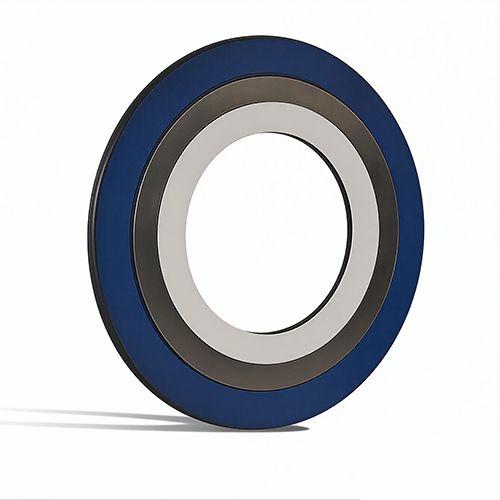
The manufacturing process starts with precision metal strip slitting. Stainless steel or nickel alloy strips are cut to exact width and thickness, usually 0.15–0.25 mm. Next comes filler preparation: flexible graphite, PTFE, or ceramic filler is calendered to uniform density. The core winding station then wraps the metal strip and filler around a mandrel under controlled tension. This step determines sealing tightness. After winding, outer and inner rings are laser-welded or spot-welded. Inner rings protect the sealing element from inward buckling under high compression. Finally, each gasket is pressed to specified thickness, visually inspected, and dimensionally checked with optical comparators. At Ningbo Kaxite Sealing Materials Co., Ltd., every batch also undergoes helium leak testing and compression recovery verification before shipment.
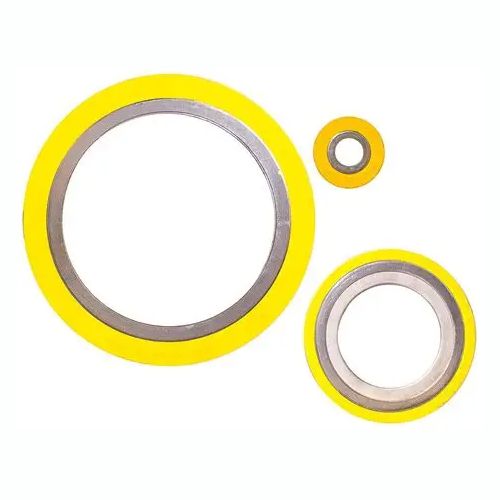
One often-overlooked detail is winding tension. If tension varies by more than 5% during a run, the gasket density becomes uneven, creating micro-channels for fluid to escape. Kaxite uses automated tension feedback on every winding machine and logs data for each gasket serial number. This gives procurement teams full traceability from raw material heat number to final test report.
Buyers frequently report three recurring problems: suppliers cannot provide material certificates, delivered gaskets vary in thickness, and lead times stretch without warning. These issues are especially damaging for maintenance teams planning turnarounds. Ningbo Kaxite Sealing Materials Co., Ltd. removes these friction points by standardizing production batches, maintaining a large inventory of 304, 316L, and Monel strips, and shipping with full mill test reports and dimensional inspection records.
| Procurement Pain Point | Kaxite Solution |
|---|---|
| Missing material certificates | Full heat number traceability with EN 10204 3.1 certificates |
| Thickness variation in delivered batch | Laser measurement and ±0.1 mm thickness control |
| Unstable lead times | In-stock standard sizes and 7-day express production for custom rings |
| No third-party test data | Helium leak, compression, and recovery reports included with every order |
For a procurement manager, this translates into fewer supplier audits, lower inspection costs, and a predictable supply chain. Instead of chasing quality after the fact, you receive documented proof that each gasket meets ASME B16.20 and your internal flange specification.
Choosing the correct metal and filler combination depends on pressure, temperature, and chemical exposure. In a refinery, high-temperature hydrogen service may require 321 stainless steel with flexible graphite. In a pharmaceutical plant, PTFE filler and 316L metal are common because of cleanability and chemical resistance. Ningbo Kaxite Sealing Materials Co., Ltd. helps buyers match the right combination and provides performance data before quotation.
| Metal Strip | Filler Material | Max Temperature | Typical Application |
|---|---|---|---|
| 304 / 304L | Flexible Graphite | 850°F | Steam, general chemical |
| 316L | PTFE | 500°F | Acids, food processing |
| 321 | Flexible Graphite | 1000°F | High-temp refining |
| Monel 400 | Flexible Graphite | 900°F | Seawater, alkaline media |
| Inconel 625 | Mica | 1200°F | Gas turbine exhaust |
Kaxite does not treat material selection as a simple cross-reference. Our engineering team reviews your flange geometry, bolt load, and operating cycles to recommend the optimal winding density and inner ring design. This prevents over-compression, reduces stress relaxation, and extends the service life of the gasket.
A common scenario in industrial procurement goes like this: the gasket arrives, looks fine, but no test data accompanies the shipment. Later, a leak occurs and the supplier cannot prove the gasket met specifications. Ningbo Kaxite Sealing Materials Co., Ltd. closes this gap by performing in-house testing and shipping a performance report with every batch. Buyers should demand nothing less.
| Test Item | Standard Reference | Typical Kaxite Value |
|---|---|---|
| Helium leak rate | EN 13555 / DIN 3535 | ≤1×10⁻⁶ mbar·L/s |
| Compression recovery | ASME B16.20 Annex | ≥45% |
| Dimensional tolerance | ASME B16.20 | ±0.1 mm |
| Filler density | Internal QA | ±5% of nominal |
This level of transparency makes incoming inspection faster and gives maintenance engineers confidence before installation. If a flange still leaks after proper torque, the test report helps isolate the cause quickly, saving thousands in diagnostic labor.
Q1: How are spiral wound metal gaskets manufactured to pass API 6A fire-safe requirements?
A1: They are manufactured with controlled winding tension, high-density graphite filler, and solid inner and outer rings. Ningbo Kaxite Sealing Materials Co., Ltd. uses certified raw materials and performs post-winding fire-safe simulation testing according to API 607. The spiral winding density is increased by 10–15% to prevent filler loss under thermal cycling, and the finished gasket is helium leak tested before shipment.
Q2: How are spiral wound metal gaskets manufactured for high-vacuum or cryogenic service?
A2: In these applications, the manufacturing process must be cleaner and more precise. Kaxite uses vacuum-melted 316L or Inconel strips, PTFE or expanded graphite filler with low outgassing, and special inner rings with radial slots. The winding starts under nitrogen purge to reduce trapped oxygen, and each gasket is helium leak tested at 1×10⁻⁶ mbar·L/s to ensure it will not contaminate the system or develop leaks at cryogenic temperatures.
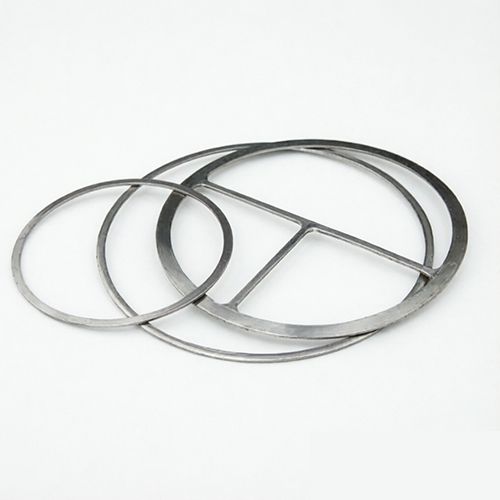
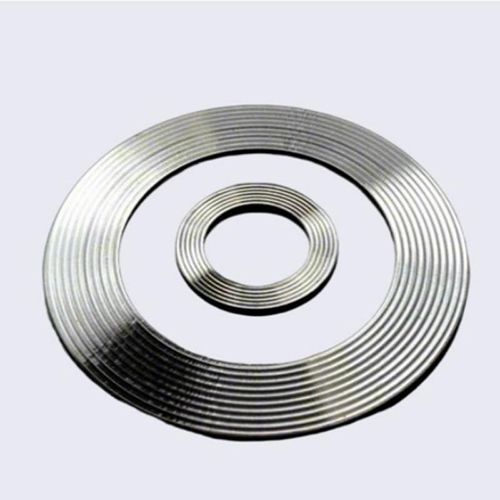
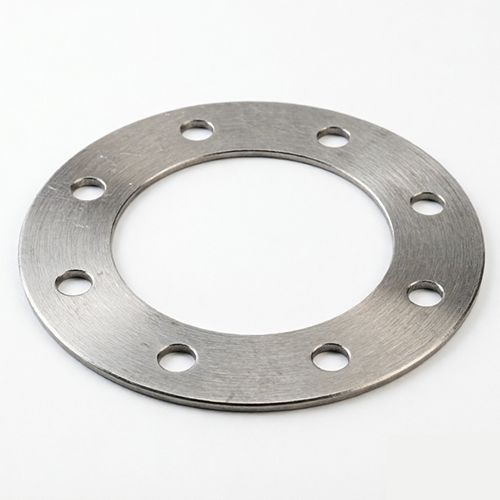
When you choose Ningbo Kaxite Sealing Materials Co., Ltd., you gain more than a gasket supplier. Our factory in Ningbo, China, specializes in spiral wound metal gaskets, kammprofile gaskets, and sheet gaskets for demanding flange sealing applications. We provide full material traceability, third-party test reports, and fast global shipping to keep your maintenance schedule on track. Visit our website at https://www.metal-gaskets.com to request a quote or download technical datasheets. For direct inquiries, contact our team at [email protected].
Smith, J. (2021). Spiral Wound Gasket Performance in High-Temperature Flange Joints. Journal of Pressure Vessel Technology, 143(2).
Chen, L. (2020). Finite Element Analysis of Spiral Wound Gasket Stress Distribution. International Journal of Pressure Vessels and Piping, 182.
Kumar, A. (2019). Leakage Reduction in Bolted Flange Connections Using Spiral Wound Gaskets. Sealing Technology, 2019(5).
Williams, R. (2022). Material Selection for Spiral Wound Gaskets in Corrosive Environments. Corrosion Science, 198.
Patel, D. (2018). Manufacturing Tolerances and Sealing Performance of Spiral Wound Gaskets. Journal of Engineering Materials and Technology, 140(3).
Garcia, M. (2023). Comparative Study of Graphite-Filled Spiral Wound Gaskets for Heat Exchangers. Applied Thermal Engineering, 220.
Lee, S. (2021). Effect of Winding Density on Spiral Wound Gasket Compression Recovery. Tribology International, 156.
Zhang, H. (2020). Spiral Wound Gasket Reliability in LNG Service. Journal of Natural Gas Science and Engineering, 80.
Nguyen, T. (2019). Leak Detection Methods for Spiral Wound Gaskets in Flange Assemblies. NDT & E International, 106.
Brown, J. (2022). Optimizing Inner Ring Design of Spiral Wound Gaskets for Vacuum Applications. Vacuum, 203.
-