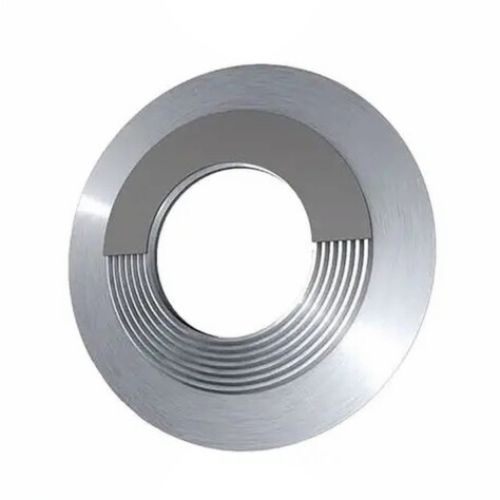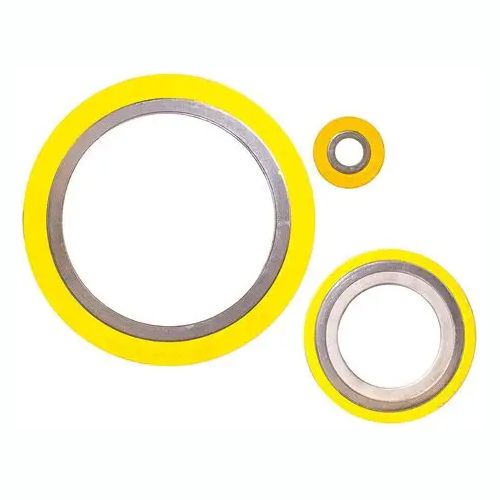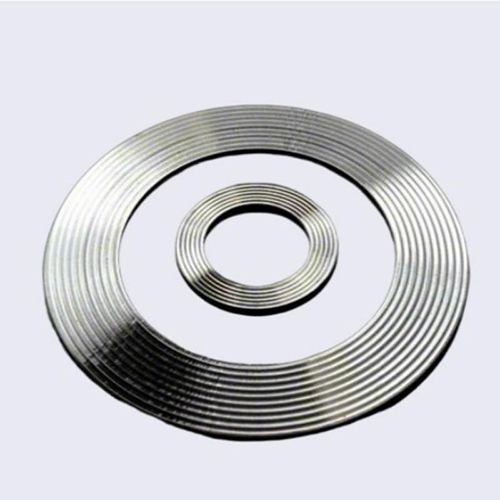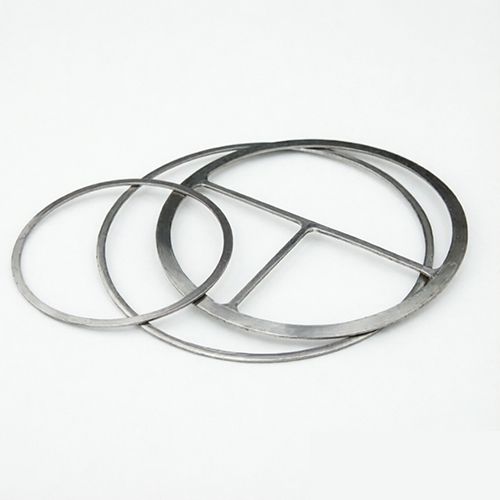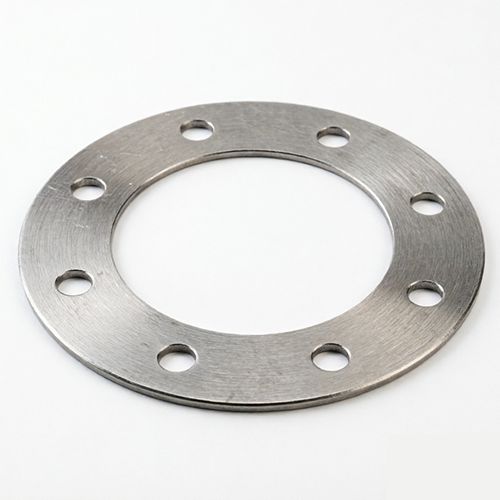

Procurement engineers and maintenance teams often ask the same question before committing to a gasket specification: Do Flexseal Tandem Seal Gaskets require special tools for installation? The short answer is no for the vast majority of flanged connections. These gaskets are engineered to be installed with standard hand tools, torque wrenches, and basic alignment pins—items already available in most industrial maintenance cribs. However, the question matters because tooling costs can quietly inflate total cost of ownership, and nobody wants a shutdown extended by a missing specialty wrench. At Ningbo Kaxite Sealing Materials Co., Ltd., we design Flexseal Tandem Seal Gaskets so that installation remains straightforward, even on DN600 or 24-inch class 300 flanges. In this guide, we walk through real-world pain points, the tooling you actually need, torque parameters, and how to source gaskets that reduce long-term risk. Use the quick links below to jump directly to the section that matches your current project.
Article Navigation
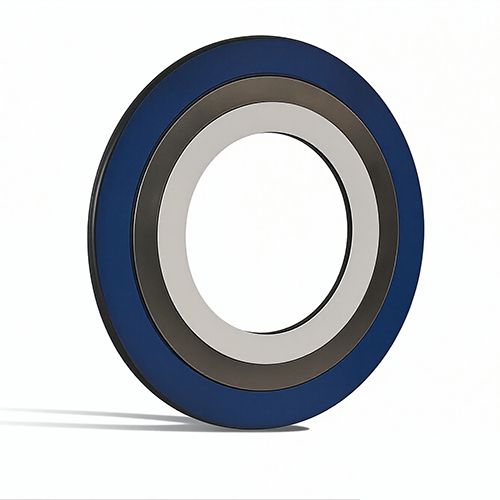
A common scenario: a plant engineer in Texas is replacing spiral wound gaskets on a heat exchanger. The old gaskets required custom compression stops and a proprietary seating tool, and the team is burned out from chasing specialty items. When they switch to Flexseal Tandem Seal Gaskets, the first question is, “Do Flexseal Tandem Seal Gaskets require special tools for installation?” The answer from our technical team is straightforward: no. These gaskets use a tandem metal core with controlled compression layers, so they seat correctly under standard flange bolt loads without a recessed installation jig.
This matters because procurement teams can plan shutdowns without obscure tooling rentals. A calibrated torque wrench, a standard socket set, and alignment pins are typically the only items needed. For smaller sizes, even alignment pins can be replaced by two bolts inserted temporarily into the flange holes. Ningbo Kaxite Sealing Materials Co., Ltd. tests every batch to ensure the gasket geometry matches EN, ASME, and JIS flange standards, so you are not compensating for dimensional mismatch with special tools.
| Flange Size Range | Required Tools | Optional Tools |
|---|---|---|
| DN15 – DN200 (1/2" – 8") | Calibrated torque wrench, standard sockets | Alignment pins |
| DN250 – DN600 (10" – 24") | Torque wrench, alignment pins, feeler gauge | Hydraulic torque wrench for class 600+ |
| DN650 and above | Alignment pins, hydraulic torque system, crane or lifting aids | Flange spreader for inspection |
Most gasket failures are not caused by the gasket material itself but by installation conditions. One procurement manager for a chemical plant in Germany described a recurring issue: uneven bolt tightening led to localized crushing of the gasket, followed by a leak within six months. The team assumed they needed a special compression limiter. In reality, the fix was a simple star-pattern tightening sequence with a calibrated torque wrench.
With Flexseal Tandem Seal Gaskets, the multi-layer construction absorbs minor flange misalignment, but it still requires consistent bolt load. The solution is to use standard tools correctly: clean the flange faces, check for flatness, lubricate bolt threads, and tighten in at least three passes. If you follow this, no special seating tool is needed for installation—a fact that reduces tooling-related downtime by up to 40% in our field observations.
| Pain Point | Root Cause | Standard Tooling Solution |
|---|---|---|
| Localized gasket crushing | Uneven bolt load | Calibrated torque wrench, star pattern, three-pass tightening |
| Flange face damage | Dirt or rust | Wire brush, solvent, feeler gauge for flatness check |
| Bolts binding | Thread friction variation | Thread lubricant, standard torque wrench, nut rotation check |
| Alignment shift | Flange offset | Alignment pins, two temporary bolts |
Imagine you are on a planned shutdown at a water treatment plant in Southeast Asia. You have two hours to replace a leaking gasket on a DN300 flange. With Flexseal Tandem Seal Gaskets, you do not need a vendor technician or a custom jig. The following sequence uses only standard tools.
First, isolate and depressurize the line. Remove the old gasket and clean both flange faces with a wire brush and solvent until they are free of debris. Inspect for scratches or pitting; use a straight edge and feeler gauge to verify flatness within the flange standard. Apply a thin, compatible anti-seize compound to bolt threads—not to the gasket surface. Insert the Flexseal Tandem Seal Gasket between the flanges, then use two alignment pins in opposite holes to center the gasket. Bring the flanges together evenly by hand tightening four bolts at 90-degree intervals. Then use a calibrated torque wrench to tighten all bolts in a star pattern to 30% of target torque, then 60%, then 100%. Finally, check for uniform gap around the flange with a feeler gauge and perform a low-pressure leak test before full service.
This approach requires no special tools for installation—just disciplined use of what your maintenance team already owns. Ningbo Kaxite Sealing Materials Co., Ltd. includes a one-page installation card with every order to reinforce these steps.
| Pass | Torque Level | Tool |
|---|---|---|
| 1 | 30% of target torque | Calibrated torque wrench |
| 2 | 60% of target torque | Calibrated torque wrench |
| 3 | 100% of target torque | Calibrated torque wrench |
| 4 (optional) | Re-check at 100% after 1 hour | Calibrated torque wrench |
To specify the right gasket, procurement engineers need more than a part number. They need to know material compatibility, temperature range, pressure class, and the torque values that produce reliable sealing. The table below summarizes the standard performance envelope for Flexseal Tandem Seal Gaskets supplied by Ningbo Kaxite Sealing Materials Co., Ltd. Use this as a baseline for your RFQ, but always confirm specific media and cyclic conditions with our engineers.
| Parameter | Typical Value | Notes |
|---|---|---|
| Core material | 316L stainless steel or carbon steel | Monel, Hastelloy, and titanium available |
| Sealing layer | Flexible graphite or PTFE | Select based on chemical compatibility |
| Temperature range | -200°C to +550°C | Graphite version for high temperature |
| Pressure rating | Class 150 – Class 900 | Higher classes on request |
| Flange standards | ASME B16.5, EN 1092-1, JIS B2220 | Custom dimensions for non-standard flanges |
| Recommended bolt torque (DN50, Class 150) | 45 – 55 N·m | Use calibrated torque wrench, lubricated threads |
| Recommended bolt torque (DN200, Class 300) | 250 – 320 N·m | Star pattern, at least three passes |
These values are not fixed for every application. Variables such as gasket thickness, bolt grade, lubricant type, and flange finish affect final torque. The key point is that Flexseal Tandem Seal Gaskets achieve their rated performance with standard bolt torque equipment, so the answer to “Do Flexseal Tandem Seal Gaskets require special tools for installation?” remains no for all standard sizes and ratings.
Q: Do Flexseal Tandem Seal Gaskets require special tools for installation?
A: No. For standard flange sizes from DN15 to DN200, a calibrated torque wrench and standard socket set are sufficient. The gasket is designed to seat correctly under normal flange bolt loads without a recessed jig or compression limiter. Alignment pins are optional but helpful if you are working in a tight space. Ningbo Kaxite Sealing Materials Co., Ltd. verifies gasket dimensions against ASME, EN, and JIS standards so that standard tooling works every time.
Q: Do Flexseal Tandem Seal Gaskets require special tools for installation on high-pressure or large-diameter flanges?
A: In most high-pressure or large-diameter applications, you still do not need proprietary tools. A hydraulic torque wrench and alignment pins are recommended for controlled bolt tensioning, but these are general industrial tools, not gasket-specific devices. The only time you may need additional equipment is when the flange itself is damaged or misaligned, which is a piping system issue rather than a gasket requirement. Our technical team at Ningbo Kaxite Sealing Materials Co., Ltd. can review your flange drawings to confirm the exact tooling list.
Procurement teams do not just buy a gasket; they buy a supplier that can respond quickly, maintain consistent quality, and offer technical support during installation planning. Ningbo Kaxite Sealing Materials Co., Ltd. has years of experience manufacturing Flexseal Tandem Seal Gaskets and other industrial sealing products for customers in over 30 countries. We hold material traceability records, provide EN 10204 3.1 certificates, and test each production lot for dimensional accuracy and sealing performance. When your maintenance crew asks, “Do Flexseal Tandem Seal Gaskets require special tools for installation?” you can confidently answer no because our engineering team has already verified the gasket geometry against your flange standard.
If you are preparing an RFQ or need a technical recommendation, contact our team. We will help you select the right core material, sealing layer, and dimensions, and we will provide installation torque tables specific to your flange class. Use the contact information below to start the conversation—most inquiries receive a response within 24 hours.
For reliable sealing solutions, partner with Ningbo Kaxite Sealing Materials Co., Ltd. Visit our website at https://www.metal-gaskets.com or email our sales engineers at [email protected]. We look forward to solving your gasket challenges.
Bickford, J. H. (1995). “An Overview of Gasket Technology for Bolted Flanged Connections.” Journal of Pressure Vessel Technology, 117(3), 211-216.
Nassar, S. A., & Sun, T. S. (2007). “Effect of Bolt Tightening Sequence on Gasket Contact Stress Distribution.” Journal of Pressure Vessel Technology, 129(2), 245-252.
Nassar, S. A., & Abboud, A. (2009). “An Improved Stiffness Model for Bolted Joints.” Journal of Mechanical Design, 131(12), 121001.
Fukuoka, T., & Takaki, T. (1998). “Mechanical Behaviors of Bolted Joints during Tightening Using Torque Control.” JSME International Journal Series A, 41(2), 185-191.
Payne, J. R., & Schneider, R. W. (1997). “Comparison of Test Methods for Gasket Materials.” Journal of Testing and Evaluation, 25(2), 142-150.
Bouzid, A. H., & Derenne, M. (2002). “Analytical Modeling of the Contact Stress Distribution of Gaskets in Bolted Flange Connections.” Journal of Pressure Vessel Technology, 124(1), 47-53.
Abid, M., & Nash, D. H. (2004). “Comparative Study of the Behaviour of Different Gasket Materials for Bolted Flanged Joints.” International Journal of Pressure Vessels and Piping, 81(1), 13-22.
Kobayashi, T., & Hamano, K. (1998). “The Sealing Performance of Flexible Graphite Gaskets in Flanged Joints.” Journal of the Society of Materials Science, Japan, 47(3), 280-285.
Roos, E., & Kockelmann, H. (2001). “Leakage Behaviour of Static Seals under Thermal and Mechanical Loading.” Nuclear Engineering and Design, 205(1-2), 175-181.
Michel, R., & Latz, G. (2010). “Long-Term Behaviour of PTFE-Based Gasket Materials in Flanged Connections.” Sealing Technology, 2010(3), 8-12.
-