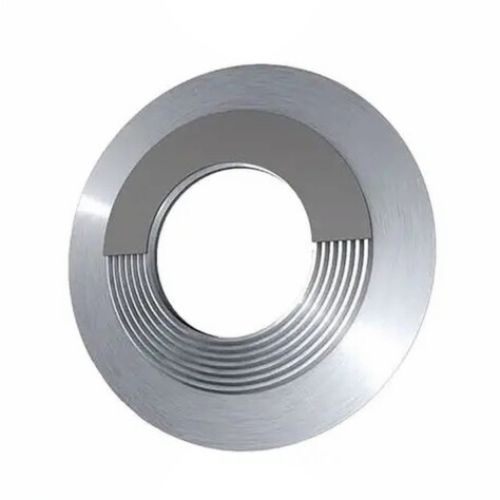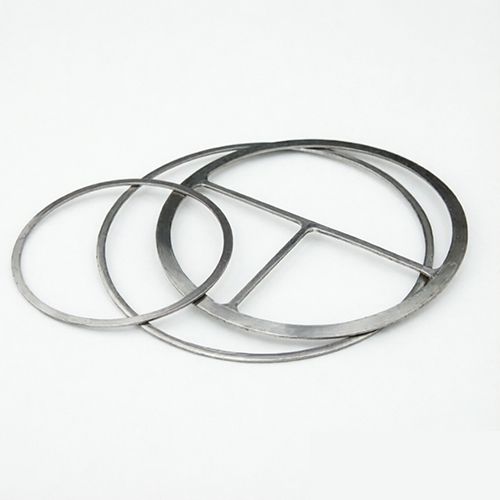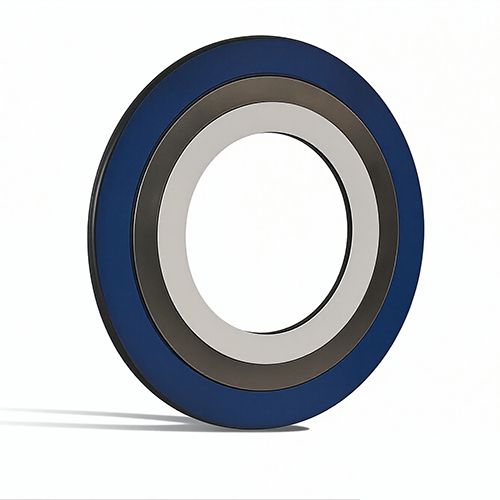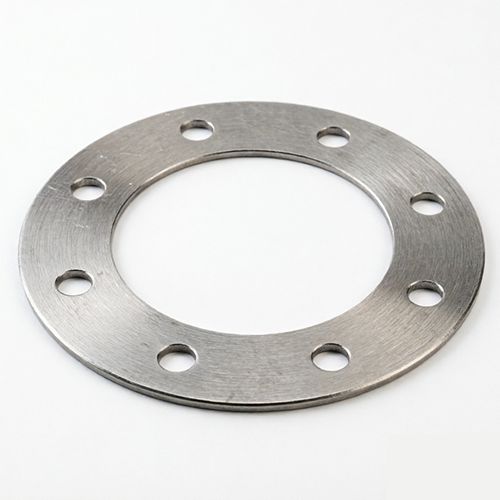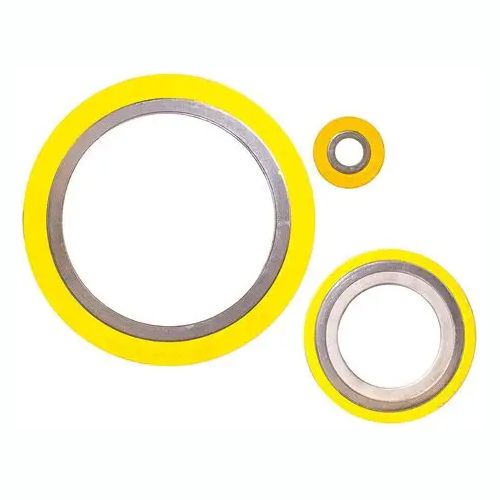

If you are responsible for sealing flanged joints in refineries, chemical plants, power stations, or marine systems, you already know that a small leak can shut down a production line, create safety risks, and eat into annual maintenance budgets. What are Corrugated Metal Gaskets used for? In simple terms, they are used to create reliable, long-lasting seals in flanged connections where temperature swings, pressure cycles, irregular flange surfaces, or aggressive media make ordinary flat gaskets fail. A corrugated metal gasket typically combines a metal core—stainless steel, carbon steel, or other alloys—with a soft facing layer such as graphite or PTFE. The corrugated profile acts like a series of controlled stress concentrators, allowing the gasket to recover after compression, maintain contact stress during thermal cycling, and seal even when flange surfaces are slightly damaged or misaligned. Procurement engineers and maintenance managers choose these gaskets for heat exchangers, boiler handholes, exhaust systems, pipe flanges, valve bonnets, and equipment where standard spiral wound or sheet gaskets cannot provide the required compressibility and recovery. Instead of chasing leaks with repeated bolt re-tightening, teams specify corrugated metal gaskets to reduce downtime, prevent fugitive emissions, and gain predictable sealing performance. In this guide, you will learn exactly how to evaluate these gaskets, avoid common specification mistakes, and source them with confidence from Ningbo Kaxite Sealing Materials Co., Ltd.
In a typical plant shutdown, a maintenance supervisor finds a flange leak on a heat exchanger that has been running for only eight months. The old gasket is hardened, cracked, and has lost compression. This is the exact moment when procurement starts asking: what else can we install to avoid another unplanned outage? Corrugated metal gaskets are selected because they solve the core problem of gasket relaxation and thermal cycling. The metal core gives the gasket structural stiffness; the corrugated profile creates multiple contact points that store energy in the ridges. When the flange breathes, temperature changes, or pressure pulsates, the ridges can flex and recover instead of permanently deforming. The graphite or PTFE facing fills small crevices, creating a tight seal on worn or slightly irregular flange surfaces. This is why you will see these gaskets in heat exchangers, exhaust manifolds, valve bonnets, boiler handholes, pipe flanges, and compressor housings.
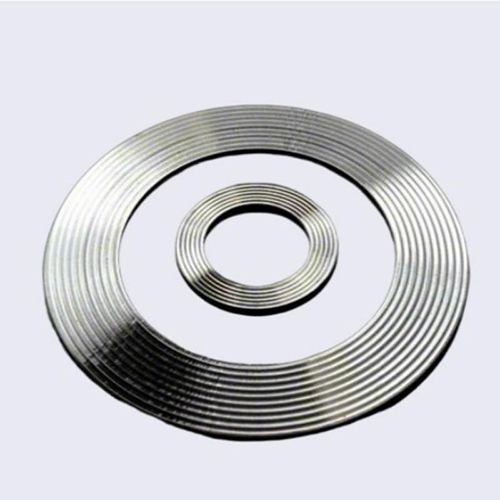
In practice, selecting the right combination is not complicated, but it requires looking at three factors: core material, facing material, and profile dimensions. For high-temperature steam, a 304 or 316L core with flexible graphite is the typical workhorse. For strong acids or oxygen-sensitive environments, a 316L core with PTFE facing may be a better fit. The table below summarizes common selection parameters.
| Parameter | Common Option 1 | Common Option 2 | Selection Tip |
|---|---|---|---|
| Core material | 304 stainless steel | 316L stainless steel | Use 316L for chloride or acid exposure |
| Facing material | Flexible graphite | PTFE | Graphite for high temperature; PTFE for aggressive chemicals |
| Temperature range | -200°C to 550°C | -200°C to 260°C | Check oxidation limits of graphite |
| Pressure class | Class 150 | Class 300–600 | Match flange rating and bolt load |
| Thickness | 2.0 mm | 3.0 mm | Thinner gaskets require flatter flanges |
One common pain point for procurement teams is choosing a lower-priced gasket without checking compression and recovery data. A buyer may compare two corrugated metal gaskets that look identical, but one uses lower-purity graphite and a thinner metal core. Six months later, the gasket leaks at a flange near the boiler, forcing a shutdown that costs far more than the initial savings. This is not a rare case; it is often the hidden cost of not specifying performance data. Ningbo Kaxite Sealing Materials Co., Ltd. solves this by supplying clear documentation for material grade, graphite purity, dimensional tolerances, and leak testing when required. Instead of guessing, you can compare suppliers on the same technical basis. The table below shows typical differences between low-cost and engineered corrugated metal gaskets.
| Cost Factor | Low-Quality Gasket | Kaxite Corrugated Gasket |
|---|---|---|
| Facing graphite purity | 92% | ≥98% |
| Leak rate at 40 bar | 1.2×10⁻³ mg/(s·m) | ≤1.0×10⁻⁴ mg/(s·m) |
| Recovery after unloading | 8% | ≥20% |
| Typical service life | 6–12 months | 24–36 months |
| Downtime risk | High | Low |
Beyond documents, pay attention to creep relaxation. A gasket that loses 30% of seating stress after 100 hours will leak even if it initially seals. Ningbo Kaxite Sealing Materials Co., Ltd. focuses on consistent material quality and manufacturing control so that the gasket you install today performs predictably after months of thermal cycles.
Another common scenario: you receive a request for a “corrugated gasket for DN80 PN16 flange” but the operating medium is mixed steam and light solvent. You ask for a quote, but the supplier returns only a price with no technical questions. That is a warning sign. A reliable sourcing process should specify the flange standard, temperature range, pressure, media, and surface condition. The table below is a quick specification checklist you can use when issuing an RFQ.
| Specification Item | Required Data | Why It Matters |
|---|---|---|
| Flange standard | ASME B16.5, EN 1092, JIS | Determines gasket dimensions and bolt circle |
| Operating temperature | Min/max and cycling range | Selects core and facing material |
| Operating pressure | Max pressure, vacuum | Determines required seating stress |
| Media type | Steam, oil, acid, solvent | Chemical compatibility |
| Flange surface condition | Flat, raised face, worn | Corrugated profile compensates for surface irregularity |
If you are not sure about corrugation pitch, Ningbo Kaxite can help recommend based on flange type. Standard pitch 1.5 mm works for smooth raised faces, while 2.0 mm or 3.0 mm may be better for rough or painted surfaces.
Q: What are corrugated metal gaskets used for in steam service?
A: In steam service, corrugated metal gaskets are used for boiler handholes, manholes, steam pipe flanges, and turbine connections where temperatures fluctuate between ambient and 400–550°C. The graphite facing seals micro-crevices, and the metal core prevents blowout under thermal pressure cycles. Procurement teams often choose 304 or 316L cores with flexible graphite facing for superheated steam lines to avoid gasket embrittlement and leak-related energy losses.
Q: What are corrugated metal gaskets used for compared to spiral wound gaskets?
A: Corrugated metal gaskets are used where flange surfaces are uneven, bolt load is lower, or repeated assembly and disassembly are required. Spiral wound gaskets rely on a precisely compressed spiral winding and may leak if the flange is not flat or bolt torque is uneven. Corrugated metal gaskets offer better recovery, lower seating stress, and more tolerance for misalignment, making them a practical choice for heat exchangers, pump casings, and older flanged joints.
A frequent pain point after installation is a leak that appears not because the gasket is wrong, but because bolts were tightened in one pass or the flange was not cleaned. One refinery reported leaks on 40% of newly installed gaskets until they introduced a controlled torque procedure. Corrugated metal gaskets perform best when the flange surface is clean, bolts are lubricated, and torque is applied in a crisscross pattern over three passes. A re-torque after the first thermal cycle is also recommended for graphite-faced gaskets because the graphite layer settles and the metal ridges reach their final seated position.
| Installation Step | Recommended Practice | Common Mistake |
|---|---|---|
| Flange cleaning | Remove old gasket, rust, oil | Leaving particles creates leak paths |
| Bolt lubrication | Apply anti-seize to threads | Dry threads cause false torque |
| Tightening sequence | Crisscross in 3 passes | One-pass full torque warps flange |
| Re-torque | After 24 h at operating temperature | Skipping re-torque reduces recovery |
Procurement teams often need more than a catalog item. They need a supplier who can produce non-standard diameters quickly, supply material certificates, and answer technical questions before the order is placed. Ningbo Kaxite Sealing Materials Co., Ltd. provides exactly that: factory-direct manufacturing, custom dimensions, and application support based on years of sealing product experience. Standard corrugated metal gaskets can be shipped in 7–10 days, and custom sizes are available with clear lead times. This solves the sourcing problem of waiting weeks for a trading company to forward a drawing to an unknown factory.
| Capability | Kaxite Support |
|---|---|
| Inner diameter range | From 15 mm to over 2,000 mm |
| Core materials | 304, 316L, 321, carbon steel, duplex |
| Facing materials | Graphite, PTFE, mica |
| Certification | ISO 9001, material certificates, leak test reports |
| Lead time | Standard sizes 7–10 days; custom 15–20 days |
If you have a specific gasket challenge or you are not sure whether a corrugated metal gasket is right for your flange condition, share your operating parameters in the comments or send your drawing for a technical review. Ningbo Kaxite Sealing Materials Co., Ltd. is a sealing materials manufacturer focused on corrugated metal gaskets, spiral wound gaskets, and custom sealing solutions. The company supports procurement teams with factory-direct pricing, material traceability, and fast engineering feedback. Visit https://www.metal-gaskets.com or contact [email protected] to request a quote or discuss your next project.
Payne, J. R., & Bazergui, A. (1987). A leakage model for metallic gaskets. Journal of Pressure Vessel Technology, 109(2), 144–150.
Bickford, J. H. (1998). An Introduction to the Design and Behavior of Bolted Joints. Mechanical Engineering Series, 43(4), 877–881.
Kobayashi, T., & Nishida, H. (2002). The effect of surface roughness on sealing performance of corrugated metal gaskets. JSME International Journal Series C, 45(3), 743–749.
Marchand, L., & Derenne, M. (1996). Long-term gasket performance under fluctuating temperature and pressure. ASME Pressure Vessels and Piping Conference, 326, 31–38.
Winter, J. R., & Leon, G. F. (1985). Fugitive emissions from gasketed flanged connections. Chemical Engineering Progress, 81(7), 34–39.
Abid, M., & Nash, D. H. (2004). Comparative study of gasket behaviour in bolted flanged joints using finite element analysis. International Journal of Pressure Vessels and Piping, 81(8), 619–626.
Nagata, S., & Sawada, T. (2010). Effects of corrugation pitch on compressibility and recovery of corrugated metal gaskets. Journal of Solid Mechanics and Materials Engineering, 4(8), 1102–1113.
Derenne, M., Marchand, L., & Payne, J. R. (2000). Elevated temperature leak testing of flexible graphite faced gaskets. Welding Research Council Bulletin, 443, 1–24.
Bouzid, A. H., & Chaaban, A. (1997). Flange/gasket nonlinear contact analysis for gasket creep relaxation. Journal of Pressure Vessel Technology, 119(2), 148–153.
Sato, Y. (2015). Leakage evaluation of corrugated metal gaskets for high-temperature pipe flanges. Journal of High Pressure Institute of Japan, 53(5), 245–252.
-