
Can Solid Metal Gaskets be used with corrosive fluids? This question is usually the first thing a maintenance engineer or procurement specialist asks when a flange joint starts leaking in a sulfuric acid line, a chloride-containing cooling system, or a caustic scrubber. Many buyers assume that solid metal gaskets are either universally resistant or always too risky, but the real answer depends on alloy chemistry, fluid composition, temperature, and installation practice. In aggressive chemical environments, the wrong gasket choice can lead to pitting, crevice corrosion, stress corrosion cracking, and unplanned downtime that costs far more than the gasket itself. This guide gives you a practical framework for evaluating solid metal gaskets against corrosive fluids, comparing common alloys, and specifying a reliable sealing solution. You will also see how Ningbo Kaxite Sealing Materials Co., Ltd. helps procurement teams match the right metal gasket to demanding chemical applications, reducing total cost of ownership and improving flange joint reliability. By the end of this article, you will be able to make data-driven decisions instead of relying on guesswork or supplier claims alone.
Table of Contents
A purchasing manager at a chemical plant once replaced expensive alloy gaskets with standard 304 stainless steel solid metal gaskets in a dilute hydrochloric acid line. The initial savings looked attractive on paper. Six months later, a flange leak forced an emergency shutdown, and the inspection showed deep pitting and stress corrosion cracking along the sealing surface. The acid had attacked the metal in ways that a simple pressure rating could not predict.
The lesson is clear: corrosive fluids turn gasket selection into a materials engineering problem. You must evaluate the chemical composition of the fluid, the operating temperature, the presence of chlorides or oxidizing agents, and the potential for localized corrosion. Solid metal gaskets can perform exceptionally well in corrosive service, but only when the alloy matches the medium. There is no universal “corrosion-proof” metal; there is only the right metal for a specific fluid and process window.
| Corrosion Type | Typical Trigger | Common Consequence | Suggested Solid Metal Alloy |
|---|---|---|---|
| Pitting | Chlorides, low pH | Localized holes, leakage | Alloy C276, Alloy 625 |
| Crevice corrosion | Stagnant corrosive media under gasket face | Deep attack at flange interface | Alloy 400, Titanium |
| Stress corrosion cracking | Tensile stress + hot chlorides | Sudden cracking, blowout risk | Duplex stainless, Inconel 625 |
| Uniform corrosion | Strong acids or bases | Thinning, loss of sealing load | Hastelloy C276, Alloy 20 |
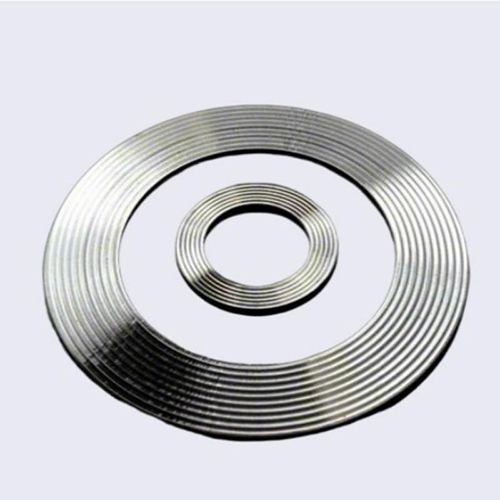
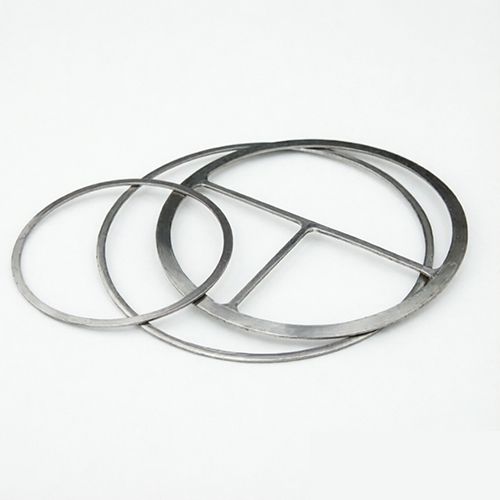
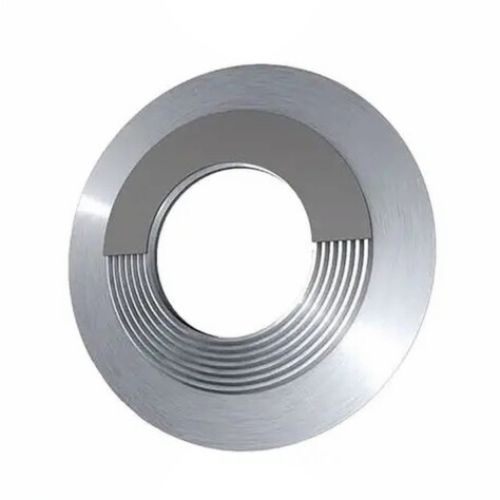
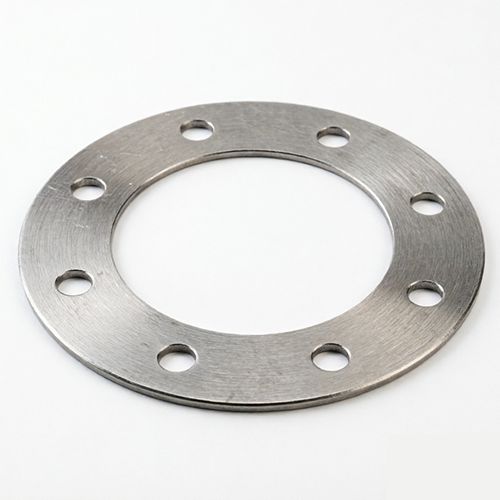
Yes, solid metal gaskets can be used with corrosive fluids, but they are not a one-size-fits-all solution. Solid metal gaskets such as ring-type joint gaskets, lens gaskets, and serrated metal gaskets create a seal by controlled metal deformation under bolt load. Their main advantage in corrosive service is that they eliminate the porous filler material found in many semi-metallic gaskets, which can absorb aggressive fluids and degrade from the inside.
However, the term “solid metal” does not mean “immune to corrosion.” A solid 316 stainless steel gasket may fail quickly in hot chloride-containing water due to chloride pitting. A solid Monel gasket may work well in hydrofluoric acid but perform poorly in nitric acid. This is why material compatibility charts and corrosion testing data must drive the selection process. For chlorinated solvents, oxidizing acids, or hot caustic solutions, the alloy choice is more important than the gasket style itself.
| Alloy | Best for Corrosive Fluids | Avoid / Risk | Typical Max Temperature |
|---|---|---|---|
| 304/316 Stainless | Mild organic acids, alkaline streams | Chlorides, hydrochloric acid | 400°C |
| Alloy 400 (Monel) | Hydrofluoric acid, seawater | Oxidizing acids | 450°C |
| Alloy C276 | Strong oxidizing acids, chlorides | Concentrated hot sulfuric acid under some conditions | 600°C |
| Alloy 625 | Seawater, phosphoric acid | Crevice corrosion in stagnant chlorides | 650°C |
| Titanium | Oxidizing chloride solutions | Dry chlorine, reducing acids | 300°C |
Imagine a sour gas processing unit running at 180°C with high hydrogen sulfide and chloride content. A standard stainless steel solid metal gasket was installed because the specification simply said “metal gasket.” Within weeks, cracks appeared along the ring surface. The failure was not a gasket defect; it was a material selection error. The combination of tensile stress, high temperature, and chlorides created conditions for chloride stress corrosion cracking.
Another common scenario occurs in seawater cooling systems. A solid metal gasket with a smooth surface can create tight crevices where stagnant seawater becomes more acidic over time. Crevice corrosion then attacks the metal under the flange face, leading to leakage even though the bulk fluid is relatively mild. The solution is often to use alloys with higher pitting resistance equivalents, such as Alloy 625 or 6Mo, and to specify gasket profiles that reduce tight crevice zones.
| Failure Scenario | Root Cause | Prevention Strategy |
|---|---|---|
| Acid line leakage | Wrong alloy for reducing acid | Use Alloy 20, Hastelloy C276, or zirconium |
| Seawater flange attack | Crevice corrosion under gasket | Upgrade to Alloy 625 or 6Mo; review gasket profile |
| Caustic scrubber cracking | Stress corrosion cracking in hot caustic | Use nickel-rich alloys; control hardness |
| High-temperature oxidation | Oxide scale breaking the seal | Select heat-resistant alloys and proper surface finish |
Yes, but only with a compatible alloy. For high-temperature sulfuric acid service, solid Hastelloy C276 or Alloy 20 gaskets often perform well because they resist uniform and localized attack. Standard stainless steel grades are generally unsuitable above 60°C in sulfuric acid.
The biggest mistake is choosing a material based only on pressure class or price, without checking chloride concentration, pH, and maximum operating temperature. This leads to pitting, crevice corrosion, or stress corrosion cracking that can cause sudden flange joint failure.
A procurement engineer at a specialty chemical plant was comparing three quotes for solid metal gaskets. One supplier offered “stainless steel,” another offered “high alloy,” but neither provided a clear compatibility matrix. The buyer needed a way to compare more than price. A standardized selection process starts with the fluid category: oxidizing acid, reducing acid, chloride-containing, alkaline, or high-temperature gas. Then you match the alloy, check the temperature limit, and finally evaluate gasket style and hardness.
For organic solvents with trace acids, 316 stainless may be sufficient. For hot hydrochloric acid, you may need a high-nickel alloy or a completely different sealing approach. For nitric acid, titanium or high-chromium alloys are often preferred. The table below summarizes the most common material families used in solid metal gaskets for corrosive service.
| Material Family | Common Fluids | Typical Use Case | Relative Cost |
|---|---|---|---|
| 300 Series Stainless | Mild acids, alkalis, steam | General chemical service | Low |
| Duplex Stainless | Chloride-containing water, seawater | Offshore platforms, desalination | Medium |
| Nickel Alloys (C276, 625) | Strong acids, chlorides, sour gas | Refineries, chemical reactors | High |
| Alloy 400 | Hydrofluoric acid, salt water | HF alkylation units | Medium-High |
| Titanium | Oxidizing chlorides, bleach | Chlor-alkali, pulp bleaching | High |
Even the most corrosion-resistant solid metal gasket will leak if the installation is poor. A common field scenario is a maintenance crew reusing old bolts or applying uneven torque across the flange. The metal gasket seats unevenly, leaving small gaps where corrosive fluid can accumulate and attack the sealing surface. Over time, the leak path grows and the joint fails.
The solution is to follow a controlled installation procedure. Clean the flange surface thoroughly, inspect for pitting or radial scratches, use new or properly lubricated bolts, and tighten in a star pattern with a calibrated torque wrench. Solid metal gaskets often require higher seating stress than soft gaskets, so verify the flange can deliver the required bolt load. If the flange is pitted, a serrated solid metal gasket may offer better sealing because it can create multiple contact points that compensate for minor surface irregularities.
| Installation Factor | Risk if Ignored | Best Practice |
|---|---|---|
| Flange surface cleanliness | Leak path, gasket damage | Remove debris, oil, and old gasket residue |
| Bolt torque sequence | Uneven compression, warping | Star pattern, three passes to final torque |
| Surface finish | Poor sealing, excessive creep | Maintain 125–250 RMS for metal gaskets |
| Gasket hardness | Flange deformation, insufficient seating | Match gasket hardness to flange material |
Ningbo Kaxite Sealing Materials Co., Ltd. understands that procurement professionals need more than a product code; they need a reliable sealing partner. The company manufactures solid metal gaskets, ring-type joints, and custom serrated gaskets in a wide range of alloys including 316, duplex, Alloy 400, Alloy 625, Hastelloy C276, and titanium. For corrosive fluid applications, Kaxite provides material compatibility reviews, hardness testing, and dimensional control to help you avoid the failures described above.
Instead of guessing whether solid metal gaskets can be used with your specific corrosive fluid, you can send the fluid concentration, temperature, and pressure to the Kaxite engineering team. They will recommend a suitable alloy and gasket profile, and can supply short lead times for both standard and custom dimensions. This approach reduces procurement risk and total cost of ownership because the gasket is specified correctly from the start.
Still evaluating whether solid metal gaskets can be used with your corrosive fluid? The fastest way to avoid costly trial and error is to work with a manufacturer that understands both materials science and real-world flange conditions. Share your operating data and let the experts recommend a proven sealing solution.
Ningbo Kaxite Sealing Materials Co., Ltd. is a specialized manufacturer of high-performance metal gaskets and sealing solutions for demanding industrial applications. From ring-type joints to custom serrated gaskets, Kaxite helps procurement teams source the correct alloy and design for corrosive, high-temperature, and high-pressure service. Visit https://www.metal-gaskets.com or contact [email protected] for a fast technical recommendation.
Sassoulas, H. (2018). Corrosion mechanisms of metallic gaskets in chemical processes. Journal of Pressure Vessel Technology, 140(4), 041201.
Brown, J. R., & Smith, A. L. (2016). Effect of chloride concentration on stress corrosion cracking of stainless steel gaskets. Corrosion Science, 112, 45–53.
Wang, Y., Liu, Z., & Chen, M. (2019). Comparative sealing performance of ring-type joint gaskets in sour gas environments. Engineering Failure Analysis, 101, 226–235.
Pereira, R., & Tanaka, H. (2015). Crevice corrosion resistance of nickel-based alloy gaskets in seawater. Materials and Corrosion, 66(9), 890–898.
Davis, T. (2020). Gasket selection for aggressive chemical service: A practical guide. Chemical Engineering Research and Design, 158, 112–120.
Nomura, K., & Ito, S. (2017). High-temperature oxidation of solid metal gaskets in steam systems. Journal of Materials Engineering and Performance, 26(7), 3185–3192.
Müller, F., & Krause, P. (2014). Sealing behavior of serrated metal gaskets under cyclic thermal loading. International Journal of Pressure Vessels and Piping, 121, 30–38.
Ahmed, S., & Rahman, M. (2021). Hydrogen embrittlement of metallic gaskets in refinery hydroprocessing units. Corrosion Engineering, Science and Technology, 56(3), 210–218.
García, E., & López, J. (2018). Influence of flange surface finish on leakage of solid metal gaskets. Proceedings of the Institution of Mechanical Engineers, Part E: Journal of Process Mechanical Engineering, 232(4), 415–423.
Zhao, H., Li, X., & Zhang, Q. (2022). Machine learning-assisted selection of corrosion-resistant gasket alloys. Materials Today Communications, 31, 103447.
-