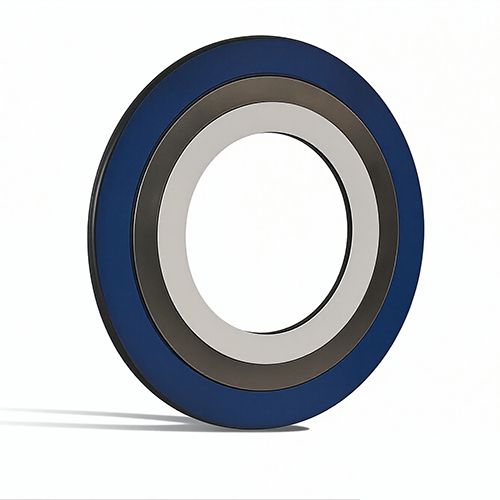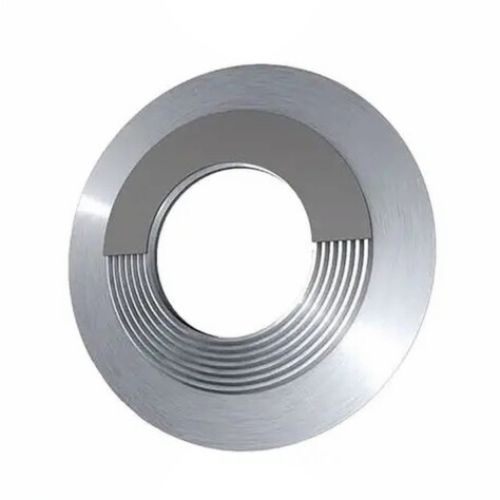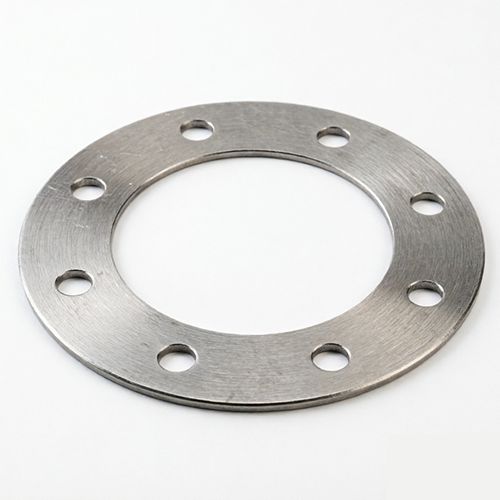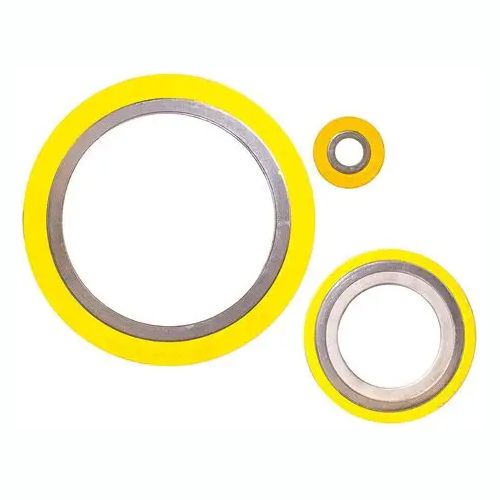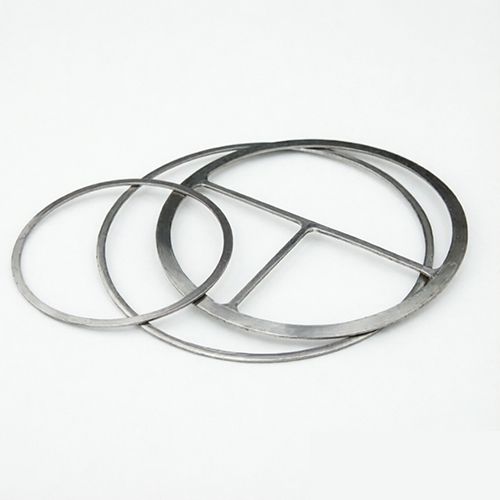

When a procurement team receives an urgent RFQ for a 620°C exhaust manifold flange, the first question is rarely about price. It is usually about risk: will the joint stay tight through thermal cycling, vibration, and bolted load relaxation? That is why buyers and design engineers keep asking: Are Corrugated Metal Gaskets suitable for high-temperature applications? The short answer is yes—when the corrugation profile, metal grade, gasket thickness, and compression load are specified for the actual flange and operating window. A corrugated metal gasket works as a controlled spring. The ridges concentrate bolt load, create multiple sealing lines, and recover part of the compression when the joint heats and cools. In high-temperature service, that springback helps offset creep relaxation and thermal mismatch between flange, bolts, and gasket. The result can be lower leakage and fewer re-torques. However, not every corrugated metal gasket is a high-temperature gasket. Material choice matters: stainless steel, Inconel, and other heat-resistant alloys behave differently; graphite or ceramic-filled layers may be needed; and the wrong corrugation pitch can crush or leak. Ningbo Kaxite Sealing Materials Co., Ltd. supports this selection with application review, sample validation, and batch-traceable production, helping buyers move from a risky guess to a documented sealing solution.
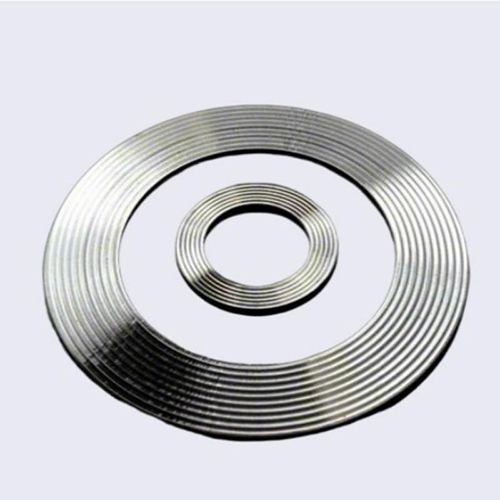
Scenario: A plant maintenance team replaces a fiber gasket on a hot air duct every few weeks. At first the joint looks fine, but after several heat-up and cool-down cycles, bolts lose preload, the gasket hardens, and a visible leak appears near the flange edge. Purchasing is asked to find a lower-cost supplier, but the real problem is joint behavior at temperature, not just gasket unit price.
Solution: A corrugated metal gasket can be a strong fit when the flange is rigid enough, the bolt load is controlled, and the material is matched to the operating temperature and media. The corrugation creates concentrated sealing lines and elastic recovery, which helps the joint remain tight as metal parts expand and contract. For procurement teams, the key is to compare offers on construction details, not only dimensions. Ask for the alloy grade, corrugation pattern, sealing layer, thickness tolerance, and material certificates. Ningbo Kaxite Sealing Materials Co., Ltd. reviews these variables against the flange drawing and service conditions so buyers can avoid a low-price gasket that fails in the first thermal cycle.
| Design Parameter | Typical High-Temperature Option | Why It Matters | Procurement Check |
|---|---|---|---|
| Service temperature | 350°C to 700°C+ depending on design | Drives alloy and sealing layer choice | Confirm continuous vs excursion temperature |
| Base metal | 304, 316L, 321, Inconel 600/625 | Affects oxidation and creep resistance | Request mill certificates |
| Corrugation profile | Concentric, chevron, or custom profile | Controls load concentration and springback | Review flange width and bolt load |
| Gasket thickness | 0.5 mm to 3.0 mm typical | Balances compressibility and blowout resistance | Check flange separation and groove depth |
| Sealing layer | Graphite or ceramic-filled layer as needed | Improves leakage control at high temperature | Verify media compatibility |
| Flange surface | Ra 3.2–6.3 µm typical target | Prevents leak paths across corrugation valleys | Confirm finish and flatness |
Scenario: A heat exchanger flange runs at 550°C during the day and cools to near ambient at night. A flat metal gasket seals well on the first start-up, but after several cycles the bolt load drops and a thin leak appears. The maintenance team re-torques the bolts, the leak stops, and the cycle repeats. Each re-torque adds labor, downtime, and safety exposure.
Solution: Corrugated metal gaskets are designed to provide elastic recovery in cyclic service. The ridges act like small springs, so when the joint contracts, the gasket can follow part of the movement instead of losing all contact stress. This does not replace proper bolt load calculation, but it can improve load retention when the flange and bolts are correctly specified. Buyers should ask for load-retention data, recommended compression, and application references for similar thermal cycles. Ningbo Kaxite Sealing Materials Co., Ltd. can review the cycle band, flange stiffness, and bolt material to recommend a corrugation pattern and alloy that fit the duty.
| Cycling Condition | Common Risk | Corrugated Metal Solution | Data to Request |
|---|---|---|---|
| Ambient to 500°C | Bolt load loss | Springback from corrugation ridges | Load-retention curve |
| 500–650°C continuous | Creep relaxation | Heat-resistant alloy plus graphite layer | Application reference |
| Rapid heat-up | Thermal mismatch | Multiple sealing lines | Flange and bolt material review |
| Vibration | Micro-motion and wear | Controlled corrugation pitch | Sample validation report |
Scenario: A buyer receives three quotations for the same flange size. One offers 304 stainless steel, another offers 316L, and a third offers Inconel with a graphite layer. The prices are far apart, but none of the quotations explains why the material was chosen. The buyer needs a clear technical basis before placing a purchase order.
Solution: Start with the operating temperature, media, and thermal cycle. Stainless steel grades are common for moderate high-temperature service, while nickel alloys are used where oxidation resistance and creep strength are more demanding. Graphite layers are widely used in high-temperature sealing because they tolerate heat and provide a compliant sealing face. PTFE layers should not be selected for high-temperature service above their limit, even if they offer excellent chemical resistance at lower temperatures. Ningbo Kaxite Sealing Materials Co., Ltd. helps procurement teams compare material options with documented temperature limits and application notes, so the selected gasket is technically defensible and commercially sensible.
| Material | Suggested Upper Service Range | Best For | Avoid When |
|---|---|---|---|
| 304 stainless steel | Up to about 500°C | General hot air and mild media | Chlorides or high creep demand |
| 316L stainless steel | Up to about 550°C | Slightly corrosive hot service | Severe chloride stress |
| 321 stainless steel | Up to about 600°C | Thermal cycling and oxidation resistance | Cost-sensitive low-temperature jobs |
| Inconel 600/625 | 700°C+ depending on design | Extreme heat and oxidation | Low-temperature budget projects |
| Graphite layer | 400–700°C+ common range | High-temperature steam and exhaust | Strong oxidizers without review |
| PTFE layer | About 260°C maximum | Chemical resistance at lower temperature | High-temperature service |
Answer: Yes, they can be suitable when the gasket is engineered for the joint. The metal grade, corrugation profile, sealing layer, thickness, bolt load, and flange condition must all be reviewed. A corrugated metal gasket selected only by dimensions may still fail if the alloy or compression load is wrong.
Answer: There is no single limit. Stainless steel constructions are often used in the 400–600°C range, while nickel alloys and graphite-faced designs may support 700°C or higher in suitable joints. The responsible approach is to confirm continuous temperature, excursion temperature, media, pressure, and cycle frequency before selecting the construction.
Answer: For high-temperature service, graphite or ceramic-based sealing layers are more common because PTFE has a much lower temperature limit. PTFE may be excellent for chemical resistance, but it should not be used as a high-temperature layer without a specific compatibility review.
Scenario: A maintenance engineer installs a new corrugated metal gasket, but the joint still leaks during start-up. The gasket dimensions match the flange, so the team suspects the gasket material. In many cases, the real issue is insufficient or uneven bolt load, poor flange flatness, or a surface finish that prevents the corrugation from seating.
Solution: Treat the gasket as one part of a bolted joint system. Corrugated metal gaskets need enough compressive load to crush the corrugation contact points and create a seal, but too much load can damage the gasket or flange. Use a controlled torque procedure, verified bolt material, and clean flange surfaces. For critical high-temperature joints, ask for a torque calculation or assembly recommendation based on the flange drawing. Ningbo Kaxite Sealing Materials Co., Ltd. supports buyers and maintenance teams with practical assembly notes, so the selected gasket has a better chance of performing in the field.
| Joint Factor | Practical Target | Why It Matters | Ask the Supplier |
|---|---|---|---|
| Bolt load | Per joint design and gasket compression | Maintains sealing contact stress | Torque calculation guidance |
| Flange flatness | Typically 0.1–0.2 mm for many joints | Avoids uneven gasket contact | Inspection recommendation |
| Surface finish | Ra 3.2–6.3 µm common target | Allows corrugation valleys to seal | Finish and flatness check |
| Bolt material | Matched to temperature and load | Limits relaxation and creep | Certificate verification |
| Assembly method | Calibrated torque and sequence | Prevents over- or under-compression | Assembly procedure |
| Leak test | Air, water, or helium as required | Validates the installed joint | Test report format |
Scenario: Three suppliers quote the same gasket size, but one quotation is 20% cheaper. The buyer wants to move fast, yet the project engineer is worried about leakage after commissioning. Without a clear RFQ checklist, the purchase decision becomes a price comparison instead of a reliability comparison.
Solution: Use a structured RFQ that includes temperature, pressure, media, flange drawing, bolt load, surface finish, certificates, and sample requirements. Ask each supplier to state the alloy grade, corrugation profile, thickness tolerance, sealing layer, and lead time. For high-temperature projects, a sample evaluation and batch traceability can reduce commissioning risk. Ningbo Kaxite Sealing Materials Co., Ltd. works with procurement teams to turn these details into a clear quotation and production plan, helping buyers compare offers on the same technical basis.
| RFQ Item | Example Input | Supplier Response to Request |
|---|---|---|
| Operating temperature | 620°C continuous | Recommended alloy and layer |
| Pressure | 10 bar | Thickness and profile review |
| Media | Exhaust gas | Compatibility statement |
| Flange drawing | DN80 raised face | Dimensional review |
| Certificates | EN 10204 3.1 mill certificates | Document package |
| Sample | 2 pieces for trial | Sample lead time |
| Packaging | Export carton with labels | Batch traceability |
| Lead time | 15–25 days | Production schedule |
Answer: They can be suitable when the flange stiffness, bolt load, and gasket compression are correctly engineered. Stainless steel flanges and bolts expand at different rates from many gasket alloys, so springback and load retention matter. A graphite-faced corrugated gasket is often considered for cyclic high-temperature service, but the final choice should be checked against the specific temperature, media, and flange design.
Answer: Compare sealing principle, compression load, recovery behavior, flange surface requirements, and documentation—not only price per piece. Corrugated metal gaskets may offer useful springback in some joints, while spiral wound gaskets have different load and application profiles. The right choice depends on the flange and operating conditions.
Answer: Provide the flange drawing, operating temperature, pressure, media, bolt size and material, surface finish, required certificates, sample quantity, and target delivery date. These details let the supplier recommend a construction instead of guessing from a size alone.
Scenario: A procurement manager needs a reliable supplier for a high-temperature gasket project, but the internal team is small. They need fast technical feedback, consistent dimensions, export packaging, and documentation that will pass an audit. Price matters, but a shipment that arrives without material certificates or batch traceability creates more work than it saves.
Solution: Ningbo Kaxite Sealing Materials Co., Ltd. supports buyers from application review through production and delivery. The team can review the flange drawing and service conditions, recommend a corrugated metal gasket construction, prepare samples for trial installation, and supply material certificates and inspection records. For repeat orders, controlled production and batch traceability help protect consistency. Buyers can review product options at https://www.metal-gaskets.com and send application details directly to the team.
| Buyer Challenge | Ningbo Kaxite Sealing Materials Co., Ltd. Support | Output for the Buyer |
|---|---|---|
| Unclear high-temperature specification | Engineering review of temperature, media, and flange | Recommended gasket construction |
| Risk of batch variation | Controlled production and batch traceability | Consistent dimensions |
| Need for documentation | Material certificates and inspection records | Audit-ready file |
| Custom flange dimensions | Drawing-based customization | Sample approval before mass production |
| Urgent RFQ | Clear quotation and export planning | Defined lead time |
| Leak issue in the field | Practical failure review | Actionable sealing recommendation |
Have a hot-flange sealing challenge? Send your flange drawing, operating temperature, pressure, media, and bolt details to the team. A clear technical brief is the fastest way to get a useful recommendation instead of a generic price list.
Ningbo Kaxite Sealing Materials Co., Ltd. is a sealing materials manufacturer and export partner for engineered corrugated metal gaskets, spiral wound gaskets, and high-temperature sealing components. The company supports procurement teams with drawing-based customization, material certificates, sample evaluation, batch traceability, export packaging, and responsive technical communication. If you are comparing corrugated metal gasket options for a hot flange, contact [email protected] or visit https://www.metal-gaskets.com to review product options and start a practical, traceable sealing solution.
Bouzid, A.-H., & Nechache, A. (2005). The modeling of the effect of gasket creep-relaxation on the leakage of bolted flange joints. Journal of Pressure Vessel Technology, 127(3), 244–249.
Nechache, A., & Bouzid, A.-H. (2007). Creep analysis of bolted flange joints. International Journal of Pressure Vessels and Piping, 84(3), 185–194.
Abid, M., & Nash, D. H. (2003). Comparative study of the behaviour of conventional gaskets and spiral wound gaskets in bolted flange joints. International Journal of Pressure Vessels and Piping, 80(10), 707–714.
Kondo, T., & Matsuoka, T. (1999). Evaluation of sealing performance of metal gaskets under high-temperature conditions. ASME Pressure Vessels and Piping Division Publication, 382, 135–142.
Fukuoka, T., & Takaki, T. (2003). Finite element analysis of bolted flange joints under thermal loading. Journal of Pressure Vessel Technology, 125(2), 175–181.
Sawa, T., & Hirose, T. (2004). Mechanical behavior of metal gaskets in bolted pipe flange connections under high temperature. Journal of Pressure Vessel Technology, 126(4), 465–471.
Nagata, S., & Shoji, T. (2001). Leakage behavior of metal gaskets at elevated temperatures. Nuclear Engineering and Design, 208(1), 45–54.
Nitta, A., & Kikuchi, M. (2010). Thermal cycling effects on bolted flange joint tightness with metal gaskets. Journal of Solid Mechanics and Materials Engineering, 4(11), 1697–1708.
Wang, Y., & Li, J. (2018). High-temperature sealing performance of corrugated metal gaskets with graphite interlayers. Materials Science and Engineering: A, 736, 210–218.
Zhang, H., & Chen, L. (2021). Creep relaxation and leakage prediction of corrugated metal gaskets in thermal cycling. International Journal of Pressure Vessels and Piping, 189, 104271.
-