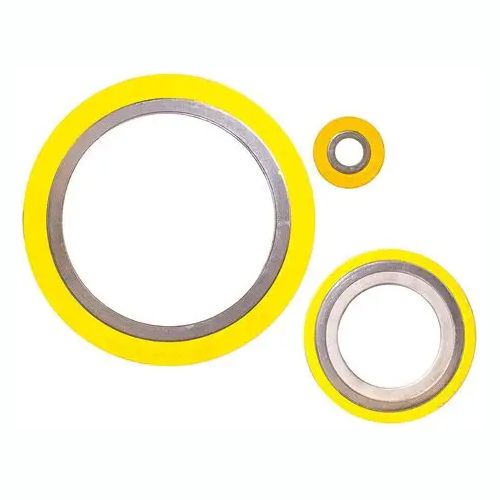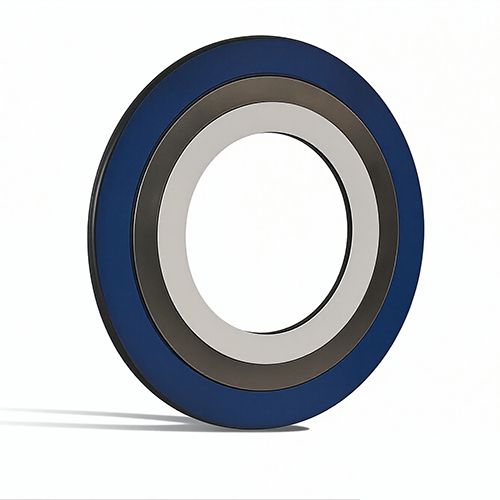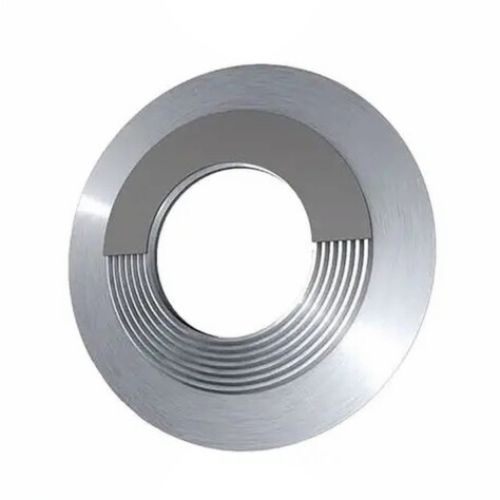

Are Jacketed Metal Gaskets Suitable for Corrosive Chemical Environments? The short answer is yes, provided the jacket polymer, the metal core and the installation torque are treated as one sealing system rather than three separate line items on a purchase order. Picture a plant in the middle of a production campaign: a heat exchanger on a 6-inch line carries 20 percent hydrochloric acid at 90 °C, a flange begins to weep on the night shift, and maintenance blames the gasket. When the joint is opened, the PTFE jacket shows a small score mark, acid has reached a carbon steel core, the core has corroded and swollen, and the sealing face has been pushed apart. Procurement teams meet this scenario constantly, and it is exactly the scenario that correct jacket and core selection should prevent. Jacketed metal gaskets combine a strong metallic core, usually 316L stainless steel, Monel, Hastelloy or a comparable alloy, with a chemically inert outer layer such as PTFE, PFA or FEP. The core carries bolt load and resists blowout, while the jacket handles the aggressive medium. At Ningbo Kaxite Sealing Materials Co., Ltd. we build these gaskets around a customer's actual media list, temperature cycling and flange condition, then we verify them before they leave the plant. This guide explains what makes a jacketed gasket succeed in corrosive service, which parameters belong in the specification, and the mistakes that turn a good gasket into a repeat leak.
In this guide
A maintenance planner at a specialty chemical plant orders forty jacketed gaskets for a bromine transfer line, choosing them by flange size and price alone. Six weeks later three joints weep, one joint is found with a blister under the jacket, and the whole line is shut down for investigation. The gaskets were not defective. They were simply wrong for the duty: a thin PTFE jacket over a carbon steel core, selected without checking the media list or the thermal cycling profile of the line. The purchasing team then faces the classic problem, which is that a low-cost gasket that fails twice costs far more than a properly specified one that lasts three turnaround cycles.
The solution is to specify by chemistry first, mechanics second, and price last. Define the medium and concentration, the operating and upset temperatures, the pressure class, the flange material and finish, and whether the service involves thermal cycling or vacuum. With those five inputs, jacket and core can be matched in minutes, and the specification becomes repeatable across future orders. In Ningbo Kaxite Sealing Materials Co., Ltd. we ask for this data before quoting, because the difference between a two-year gasket and a two-week gasket is usually one missing data point.
| Corrosive duty | Typical failure mode | Usual root cause | Sealing response |
|---|---|---|---|
| 98% sulphuric acid, ambient | Jacket blister, weeping joint | Porosity or score in jacket allows acid to reach a carbon steel core | 316L core with thicker PFA jacket and fully encapsulated edges |
| Wet chlorine, 80 °C | Pitting of the metallic core | Core alloy not resistant to oxidising halogens | Hastelloy C-276 core with PFA jacket |
| 15% hydrochloric acid, 90 °C | Seat relaxation and bolt load loss | PTFE creep at temperature | ePTFE or PFA jacket, higher initial stress, disc spring washers |
| 50% caustic soda, 120 °C | Environmental stress cracking of jacket | Hot alkali attacking standard PTFE under high stress | PFA jacket, controlled jacket stress, guided design |
| Acetic acid vapour, cyclic | Leak after thermal cycling | Mismatch in expansion between jacket and core | Thin jacket section combined with live-loaded bolting |
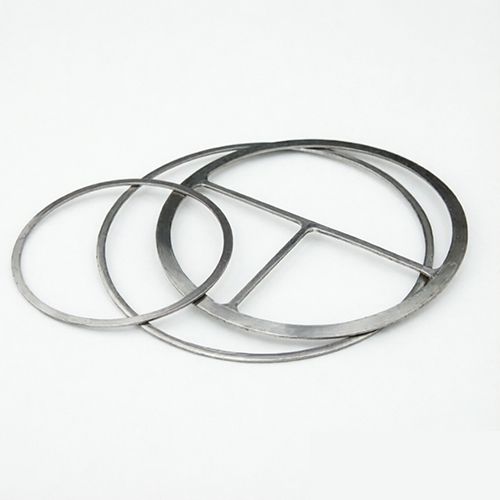
The design is straightforward once you separate the duties. The metal core, typically 316L stainless steel, Monel 400, Hastelloy C-276 or duplex stainless steel, provides mechanical stiffness and carries the bolt load. The jacket, usually PTFE, expanded PTFE, PFA or FEP, provides the chemical barrier and conforms to the flange surface at low stress. In corrosive chemical environments the jacket is the primary barrier, but the core decides what happens when that barrier is damaged by a scratch, a handling mark or permeation over time. A core that corrodes will expand and force the sealing faces apart, which is why core alloy selection matters as much as jacket selection.
Permeation is the second mechanism worth understanding. All fluoropolymers allow a small amount of aggressive vapour to pass through, particularly at elevated temperature, so the space behind the jacket and the exposed core edge require attention. Fully bonded and fully encapsulated constructions, correct jacket thickness at the sealing edge, and a core alloy that tolerates incidental contact together form the practical solution. Kaxite builds jacketed metal gaskets to ASME B16.20 dimensional practice with controlled jacket thickness and edge coverage, which is the detail most buyers never see but every leaking flange reveals.
A common sourcing problem appears when a buyer receives three quotations that all claim to be "PTFE jacketed" yet differ by a factor of two in price. The difference is usually jacket thickness, core alloy, edge encapsulation and testing, none of which appear in a short description. The solution is to put the parameters into the inquiry and require them on the certificate. The tables below show the working ranges that Kaxite applies when recommending a construction for corrosive service.
| Jacket material | Service temperature | Chemical resistance | Permeation and creep | Best fit |
|---|---|---|---|---|
| PTFE | -200 °C to 260 °C | Excellent against acids, bases, solvents | Moderate permeation, higher creep | General chemical duty, ambient to moderate temperature |
| Expanded PTFE | -240 °C to 260 °C | Excellent, similar to PTFE | Lower creep, better recovery | Cyclic duty, glass-lined and fragile flanges |
| PFA | -200 °C to 260 °C | Excellent, better stress crack resistance | Lower permeation, smoother surface | Hot acids, halogens, high-purity service |
| FEP | -200 °C to 200 °C | Excellent, chemically similar to PFA | Lower temperature ceiling | Mid-temperature corrosive lines, easy-clean surfaces |
Core selection follows the upset condition rather than the normal condition, because a single excursion is what destroys a gasket. A 316L core is adequate for many diluted acids and mild alkalis, while Monel 400 suits hydrofluoric acid and seawater, and Hastelloy C-276 covers wet chlorine, hypochlorite and mixed oxidising acids. The third table collects the installation parameters that determine whether a correctly selected gasket actually seals.
| Installation parameter | Recommended value | Why it matters in corrosive service |
|---|---|---|
| Flange surface finish | Ra 3.2 µm to 6.3 µm | Too smooth allows jacket slip, too rough damages the barrier layer |
| Gasket seating stress | Per ASME PCC-1 and gasket manufacturer data | Uniform stress prevents crevices where acid concentrates |
| Bolt tightening sequence | Star pattern in three or four passes | Even load avoids local jacket extrusion and leak paths |
| Flange parallelism | Within 0.5 mm across the face | Misalignment overloads one side and opens a permeation gap |
| Bolt lubrication | Specified lubricant, known friction factor | Predictable torque produces predictable residual load |
An operations engineer rewrites a work instruction after a third leak on the same reactor nozzle, and the root cause turns out to be a single impact wrench applied to one bolt at a time. The gasket was correct, the flange was correct, and the installation destroyed the seal. In corrosive chemical environments a damaged jacket edge is not a cosmetic issue, because the medium will find the core within days. The solution is a controlled procedure: clean and inspect the flange, verify finish and flatness, seat the gasket concentrically, lubricate the studs, and tighten in a star pattern with a calibrated torque wrench in at least three passes, then re-torque after the first thermal cycle.
Hot lines deserve additional attention. Fluoropolymer jackets relax under sustained load at temperature, so disc springs or live-loaded bolting help hold residual stress between maintenance windows. Where the medium is highly permeating, such as wet chlorine or hot acetic acid, a design with a barrier layer or a PTFE envelope over a corrugated core often outperforms a simple flat jacket. Kaxite supplies installation guidance with each order and can review torque values against flange class and bolt size, which removes most of the guesswork from the maintenance team.
Q: Are jacketed metal gaskets suitable for corrosive chemical environments at high temperature?
A: Yes, within the limits of the jacket polymer. PTFE and PFA jackets serve continuously up to about 260 °C, but permeation, creep and stress cracking all increase with temperature, so the construction should be reviewed rather than assumed. Above 200 °C, specify PFA for lower permeation, confirm the core alloy against the medium, and use live-loaded bolting to compensate for relaxation. For oxidising halogens and hot concentrated acids, a Hastelloy core with a PFA jacket and a verified compression stress is the safer combination, and Ningbo Kaxite Sealing Materials Co., Ltd. can run the compatibility check against your media list before shipment.
Q: Can one jacketed gasket handle several different chemicals in the same plant?
A: Often yes, but only if the jacket and core are chosen for the most aggressive medium and the highest temperature in the group, not the average. A PTFE jacket with a 316L core covers many diluted acids, alkalis and solvents, which makes it a practical stock item for mixed chemical warehouses. Problems appear when the group includes hydrofluoric acid, wet chlorine or hot concentrated caustic, because these attack the core or crack the jacket. A simple media matrix, reviewed once with the gasket supplier, is usually enough to split the stock into two or three standard constructions and prevent misapplication at the store counter.
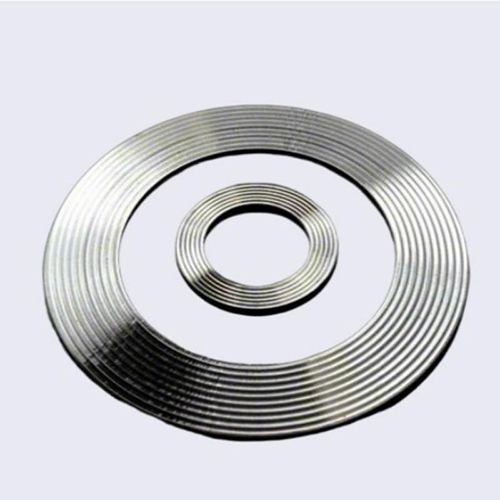
A buyer comparing quotations on price alone often discovers the real cost later, when a leaking flange causes lost production, cleanup and overtime. The solution is to compare on verified performance: jacket thickness measurement, core material certification, dimensional checks to ASME B16.20, and where required, a leakage or compression test report. Ningbo Kaxite Sealing Materials Co., Ltd. produces jacketed metal gaskets, spiral wound gaskets, Kammprofile gaskets and related sealing products for chemical, petrochemical and pharmaceutical plants, and supports buyers with material certificates, batch traceability and application review before the order is released. Documented parameters and consistent batches turn a corrosive service gasket from a consumable gamble into a planned maintenance item, which is what procurement teams actually want from a sealing supplier.
If a corrosive line in your plant keeps consuming gaskets, send us the medium, concentration, operating temperature, pressure class and flange details, and our engineers will propose a jacket and core combination with the supporting data. Ningbo Kaxite Sealing Materials Co., Ltd. is a manufacturer of jacketed metal gaskets, spiral wound gaskets, Kammprofile gaskets and precision sealing components serving chemical processing, petrochemical, pharmaceutical and power customers worldwide. We combine in-house production, material verification and application engineering so that buyers receive a gasket that matches the duty rather than the catalogue page. Full product information is available at https://www.metal-gaskets.com, and technical inquiries can be sent to [email protected].
Ebnesajjad, S., 2017. Fluoropolymer liners for chemical process sealing: selection and failure modes. Journal of Fluorine Chemistry, 198.
Müller, H. and Krause, B., 2018. Leakage behaviour of jacketed gaskets under thermal cycling in sulphuric acid service. Sealing Technology, 2018(9).
Tanaka, Y., Sato, K. and Ishida, M., 2020. Effect of flange surface finish on the sealing performance of PTFE-jacketed metal gaskets. Journal of Pressure Vessel Technology, 142(3).
Roberts, P.A., 2016. Gasket selection for corrosive chemical environments: a practical review. Chemical Engineering Research and Design, 112.
Zhou, L., Wang, H. and Chen, X., 2021. Creep relaxation of expanded PTFE gaskets at elevated temperature. International Journal of Pressure Vessels and Piping, 189.
Andersson, K. and Lindqvist, R., 2019. PFA versus PTFE jacketing in wet chlorine and hydrochloric acid service. Materials and Corrosion, 70(6).
Patel, R. and Mehta, S., 2022. Bolt load retention in jacketed gaskets for glass-lined flanges. Journal of Loss Prevention in the Process Industries, 74.
Fischer, M., 2015. Avoiding crevice corrosion in metallic gasket cores. Anti-Corrosion Methods and Materials, 62(5).
Nakamura, T. and Kobayashi, S., 2020. Fugitive emission limits and gasket qualification under ASME and EN standards. Sealing Technology, 2020(4).
Gupta, A. and Sharma, V., 2023. Chemical compatibility screening of elastomer and fluoropolymer sealing materials. Polymer Testing, 117.