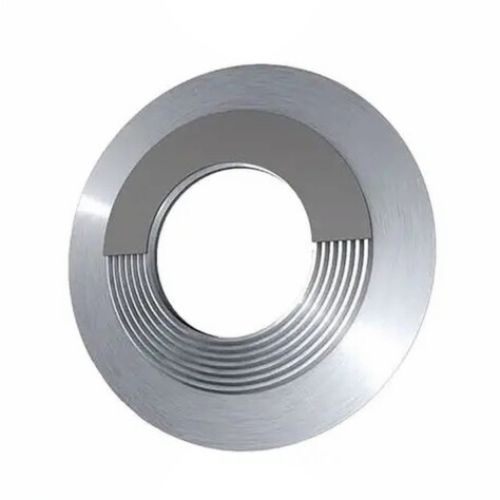

Which Materials Are Best for Metallic Gaskets? Picture a shutdown window closing in six hours, and a buyer is holding two quotes: one promises fast delivery of 316L stainless steel, while the other recommends a high-nickel alloy at nearly triple the price. The flange is on a sour-gas line, the flange faces show light pitting, and the maintenance team needs a decision that protects the seal without turning a routine replacement into a budget crisis. This is where material selection stops being a catalogue exercise and becomes a reliability decision. Ningbo Kaxite Sealing Materials Co., Ltd. built its practical guide, Which Materials Are Best for Metallic Gaskets?, for exactly this moment: matching media, temperature, pressure, flange finish, and bolting practice to a metallic gasket that can be installed with confidence. The goal is not to buy the most expensive alloy. It is to choose the lowest-lifecycle-cost material that controls leakage, resists corrosion, and arrives with traceable certificates. A wrong call can trigger rework, flange damage, or a repeat leak. For procurement teams, the right answer sits between over-specifying and under-protecting. This guide turns that gap into a clear decision path.
The most common procurement pain is not a missing material datasheet; it is a datasheet that ignores the leak path. A buyer may compare yield strength, price per piece, and delivery time, yet still miss the real question: how will the gasket behave after thermal cycling, bolt relaxation, and media attack? On a refinery flange with a scratched sealing face, a premium alloy can leak just as quickly as a standard grade if the gasket style and surface finish do not support uniform contact stress. That is why material selection must begin with the service condition and the flange condition, not with the alloy name.
For procurement teams, the solution is a short screening matrix. Record media, concentration, operating temperature, design pressure, flange facing, bolt grade, and required certification before comparing quotes. Then match the gasket metal to the dominant risk: corrosion, creep relaxation, galling, or thermal fatigue. Ningbo Kaxite Sealing Materials Co., Ltd. uses this same screening logic in its Which Materials Are Best for Metallic Gaskets? guidance so that buyers can challenge vague supplier recommendations with specific operating data.
Table 1: Screening parameters for metallic gasket materials
| Parameter | Why it changes the material choice | Procurement data to request |
|---|---|---|
| Media and concentration | Chlorides, acids, and sour service can rule out low-cost grades | Chemical composition, pH, chloride level, H2S/CO2 content |
| Operating temperature | Drives creep relaxation and oxidation limits | Continuous and excursion temperatures |
| Design pressure | Affects gasket stress and blowout resistance | Pressure class, test pressure, cycling frequency |
| Flange facing | Surface finish and flatness control leakage | Ra value, waviness, damage photos, facing type |
| Bolting practice | Preload and relaxation decide contact stress | Bolt grade, lubricant, torque procedure, washer type |
| Certification | Traceability protects audits and shutdown schedules | MTC/EN 10204 3.1, heat number, PMI report |
A familiar pain appears when a plant standard says “stainless steel gasket” and three suppliers quote 304, 316L, and 321 without explaining the difference. Under mild process conditions, the lowest-cost grade may be adequate. In chloride-bearing or high-temperature service, the wrong stainless grade can suffer pitting, stress relaxation, or scaling, creating a leak path that appears only after startup. The buyer then faces urgent rework, expedited freight, and a difficult conversation with maintenance.
The solution is to separate general corrosion resistance from temperature capability and mechanical stability. 304 is a practical choice for benign media and moderate temperature. 316L adds molybdenum for better chloride and acid resistance. 321 and 347 use titanium or niobium stabilization for elevated-temperature service where sensitization matters. 410 offers hardenability and wear resistance but should not be used as a universal corrosion answer. The final selection should match grade, gasket construction, and flange finish together.
Table 2: Common stainless steel grades for metallic gaskets
| Grade | Typical temperature range | Corrosion profile | Best-fit service | Procurement note |
|---|---|---|---|---|
| 304 / 304L | Moderate to medium-high | General oxidation resistance | Steam, water, benign process lines | Confirm chloride limits before approval |
| 316 / 316L | Moderate to high | Improved chloride and acid resistance | Chemical, petrochemical, marine-adjacent service | Request heat number and PMI for critical lines |
| 321 | High temperature | Stabilized against sensitization | Hot oil, steam, thermal cycling | Verify stabilization and gasket stress data |
| 347 | High temperature | Niobium-stabilized corrosion resistance | Refinery and high-temperature piping | Check availability and lead time early |
| 410 | Moderate | Wear resistance, limited corrosion resistance | Valve trim, specific sealing components | Do not substitute for 316L without review |
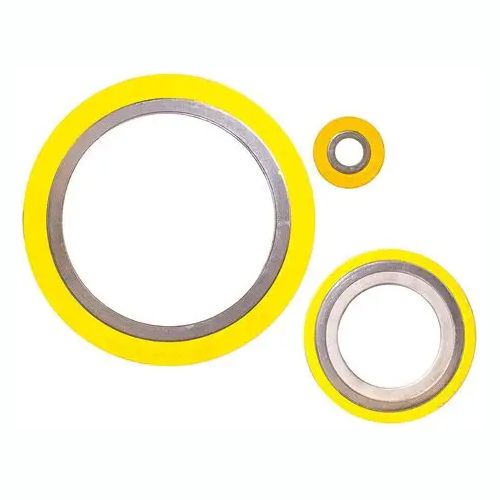
The painful scenario is a chemical plant flange that keeps failing after every shutdown. Maintenance changes the gasket, applies the same torque, and sees a new leak within weeks. The media contains chlorides or reducing acids, and the original 316L gasket is being attacked at the sealing edge. Replacing a gasket is expensive; repeated replacement is worse because it consumes shutdown time, bolting inspection hours, and credibility with operations.
The solution is to move to high-nickel alloys only where their corrosion resistance earns the cost. Monel 400 is useful in seawater, hydrofluoric acid, and some reducing environments. Inconel 600 and 625 offer high-temperature strength and oxidation resistance. Incoloy 825 provides resistance to sulfuric and phosphoric acids in many services. Hastelloy C276 is a broad-spectrum option for severe chloride and oxidizing/reducing media. These alloys should be selected with gasket style, compression, and flange facing in mind, not merely by alloy price.
Table 3: High-nickel alloy parameters for aggressive service
| Alloy | Typical strength at temperature | Corrosion strength | Typical applications | Procurement check |
|---|---|---|---|---|
| Monel 400 | Moderate to high | Seawater, HF, reducing media | Marine, chemical, salt handling | Confirm media concentration and temperature |
| Inconel 600 | High | Oxidation and high-temperature strength | Furnace, heat exchanger, steam service | Verify annealed condition and hardness |
| Inconel 625 | High | Chlorides, oxidation, high temperature | Offshore, chemical, power generation | Request alloy certificate and traceability |
| Incoloy 825 | Moderate to high | Sulfuric and phosphoric acid service | Acid processing, pollution control | Check gasket stress and flange finish |
| Hastelloy C276 | High | Severe mixed acid and chloride service | Chemical reactors, scrubbers, severe piping | Confirm availability and delivery before shutdown |
A different pain appears in cryogenic, hydrogen, or high-purity service. The buyer needs a metallic gasket that seals at low temperature or minimizes contamination, but standard stainless grades may become too hard, too reactive, or too difficult to seat on the available flange. In other cases, a hard gasket may damage a soft flange facing, turning a sealing problem into a flange repair problem.
The solution is to consider soft metal cores and special alloys as part of the sealing system. Copper and aluminum are useful for cryogenic and specialty applications because they conform well and remain ductile at low temperature. Nickel and titanium can suit specific chemical or high-purity duties. Carbon steel may be appropriate for some high-pressure or ring-joint applications where corrosion is controlled. The key is to verify compatibility, seating stress, and galvanic risk with adjacent flange materials.
Table 4: Special metal options and selection parameters
| Material | Temperature behavior | Sealing behavior | Typical service | Risk to control |
|---|---|---|---|---|
| Copper | Good cryogenic ductility | Conforms well, low leakage | Oxygen, cryogenic, specialty lines | Oxidation and media compatibility |
| Aluminum | Low-temperature use | Soft and conformable | Cryogenic and lightweight equipment | Galvanic corrosion and low strength |
| Titanium | Moderate to high | Good specific corrosion resistance | Chemical and high-purity service | Galling and cost control |
| Nickel | High-temperature capable | Good creep resistance | Caustic and specialty chemical service | Media-specific compatibility |
| Carbon steel | Moderate | High strength and low cost | RTJ and controlled-corrosion service | Rust, corrosion allowance, coating checks |
The painful surprise is a gasket that passed material review but leaks after assembly because the surface finish or coating was not controlled. A rough flange facing can prevent uniform contact. A poor coating can flake, create galvanic pairs, or change friction during torqueing. Procurement teams often focus on alloy grade and miss the surface condition that determines whether the gasket can develop and hold seating stress.
The solution is to specify finish, flatness, and coating requirements together with the metal. For metallic gaskets, a controlled Ra range, clean surfaces, and suitable bolting lubricant can matter as much as the alloy certificate. Coatings should be selected for compatibility with the process and flange material, not simply for appearance. When in doubt, request a gasket stress calculation and installation procedure from the supplier.
Table 5: Surface and coating parameters to control
| Parameter | Target discussion | Effect on sealing | Procurement action |
|---|---|---|---|
| Flange surface finish | Agree Ra range for gasket style | Controls contact stress and leakage | Inspect facing and attach photos to RFQ |
| Flatness and waviness | Check across sealing face | Prevents localized leak paths | Request flange inspection record |
| Coating thickness | Specify compatible coating system | Affects friction, corrosion, and galling | Confirm process compatibility and cure |
| Bolting lubricant | Match to bolt grade and torque | Changes preload consistency | Require torque procedure with delivery |
| Cleanliness | No oil, scale, or debris on sealing face | Protects seating and leak tightness | Include handling instructions in PO |
The painful procurement scene is an RFQ with conflicting supplier recommendations and a shutdown date that cannot move. One supplier proposes 316L, another proposes Inconel 625, and neither explains the leakage risk or the delivery risk. The solution is to ask the same decision questions across all quotes and compare answers in a table. This keeps the discussion focused on service conditions, not sales language.
Group 1 — Corrosion and delivery questions
Q1: Which Materials Are Best for Metallic Gaskets when the service is wet CO2 with chlorides? Start with 316L only if chloride levels, temperature, and oxygen control are well understood; otherwise evaluate higher-nickel options such as Inconel 625 or Hastelloy C276. Request media data and a material compatibility statement before approval.
Q2: Which Materials Are Best for Metallic Gaskets when lead time is shorter than alloy availability? Do not swap to a lower grade without a formal review. First check whether an alternative gasket construction, approved equivalent grade, or stocked Kaxite material can meet the shutdown. The lowest-risk answer may be a different construction in the same alloy family.
Group 2 — Temperature and flange condition questions
Q3: Which Materials Are Best for Metallic Gaskets under high-temperature cycling? Compare 321, 347, Inconel 600, and Inconel 625 against the actual cycle profile. Ask for creep relaxation data, gasket stress guidance, and bolting recommendations. A high-temperature alloy can still leak if preload is not maintained.
Q4: Which Materials Are Best for Metallic Gaskets when the flange finish is less than ideal? Choose a gasket style that can tolerate the measured surface, then confirm the material hardness and coating. In many cases, correcting the flange finish is more reliable than paying for a premium alloy that cannot seat properly.
Table 6: Quick decision matrix for metallic gasket buyers
| Service risk | First material family to review | Data to confirm | Escalation trigger |
|---|---|---|---|
| General steam and water | 304 or 316L stainless steel | Temperature, chloride level, flange finish | Chlorides above trace levels |
| Chloride or acid attack | 316L, Incoloy 825, Hastelloy C276 | Concentration, pH, temperature, aeration | Repeated leaks after replacement |
| High-temperature cycling | 321, 347, Inconel 600/625 | Cycle frequency, bolt relaxation, oxidation | Gasket hardness or creep data missing |
| Cryogenic service | Copper, aluminum, selected stainless | Low-temperature ductility and impact data | Flange facing damage or misalignment |
The pain is a delivery that looks correct on the invoice but fails at the audit: the heat number does not match, the certificate is incomplete, or the gasket hardness varies between boxes. For procurement teams in regulated industries, this is not a paperwork issue. It is a release risk that can stop installation and delay startup.
The solution is to verify the supplier’s material control process before the PO, not after the shipment. Ningbo Kaxite Sealing Materials Co., Ltd. supports buyers with traceable material documentation, application review, and practical guidance from the Which Materials Are Best for Metallic Gaskets? selection framework. Kaxite helps turn an open-ended material question into a documented choice that maintenance, engineering, and procurement can approve together.
Table 7: Supplier verification checklist for metallic gaskets
| Checkpoint | What good looks like | Why it matters | Buyer action |
|---|---|---|---|
| Material certificate | Heat number matches marking and PO | Confirms alloy identity | Review MTC before release |
| PMI testing | Report covers critical alloy elements | Reduces mixed-material risk | Request for high-value alloys |
| Dimensional check | Gasket dimensions and thickness meet drawing | Supports proper seating | Compare inspection report to standard |
| Surface inspection | No defects, contamination, or handling damage | Protects sealing face | Include photos in incoming inspection |
| Packaging | Protected, labeled, and traceable | Prevents damage and mix-ups | Add labeling requirements to PO |
| Technical support | Clear material recommendation and torque guidance | Reduces installation error | Ask for written selection rationale |
When the next shutdown plan lands on your desk, send the media, temperature, pressure, flange finish, and bolting details to Ningbo Kaxite Sealing Materials Co., Ltd. The team can review the application against the Which Materials Are Best for Metallic Gaskets? framework and help you compare cost, delivery, and leakage risk in one clear response. Visit https://www.metal-gaskets.com for product information or email [email protected] with your flange data. Kaxite supports procurement teams that need a practical answer, traceable documentation, and a material choice that holds up after startup.
Bouzid, A. H., and Derenne, M. (2002). On the Effect of Gasket Creep-Relaxation on the Leakage of Bolted Flange Joints. Journal of Pressure Vessel Technology, 124(2).
Nechache, A., and Bouzid, A. H. (2007). Creep Analysis of Bolted Flange Joints. Journal of Pressure Vessel Technology, 129(4).
Sawa, T., Higuchi, R., and Kawasaki, H. (2005). FEM Stress Analysis and Sealing Performance of Metallic Gasket in Bolted Flange Joints. Journal of Pressure Vessel Technology, 127(3).
Abid, M., and Nash, D. H. (2006). A Parametric Study of Metal-to-Metal Contact Flanges Using Finite Element Analysis. International Journal of Pressure Vessels and Piping, 83(6).
Kondo, K., Sato, Y., and Mori, K. (2011). Sealing Performance of Metallic Gaskets under Elevated Temperature. Nuclear Engineering and Design, 241(8).
Kaji, S., Tsuji, H., and Nakamura, T. (2012). Leakage Behavior of Spiral Wound Gaskets under Thermal Cycles. Journal of Pressure Vessel Technology, 134(5).
Waterland, A., Brown, R., and Patel, S. (2003). Gasket Selection for Aggressive Chemical Service. Sealing Technology, 2003(10).
Murali, M., Rao, K., and Srinivasan, P. (2016). Corrosion Resistance of Nickel Alloys in Chloride Environments. Materials and Corrosion, 67(5).
Li, Y., Zhang, Q., and Chen, H. (2019). High-Temperature Sealing Performance of Inconel 625 Gaskets. Journal of Materials Engineering and Performance, 28(7).
Park, J., Kim, S., and Lee, D. (2020). Effects of Surface Finish on Metallic Gasket Contact Stress and Leakage. International Journal of Pressure Vessels and Piping, 185(1).