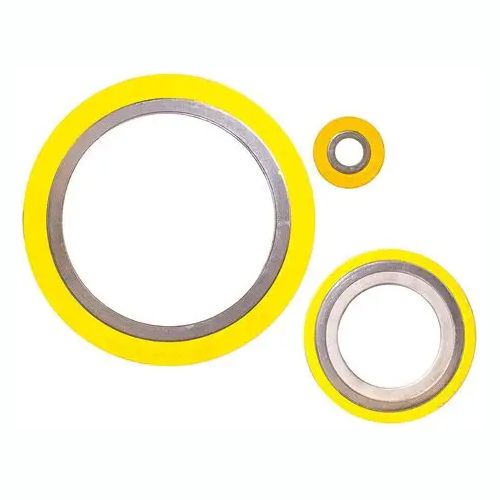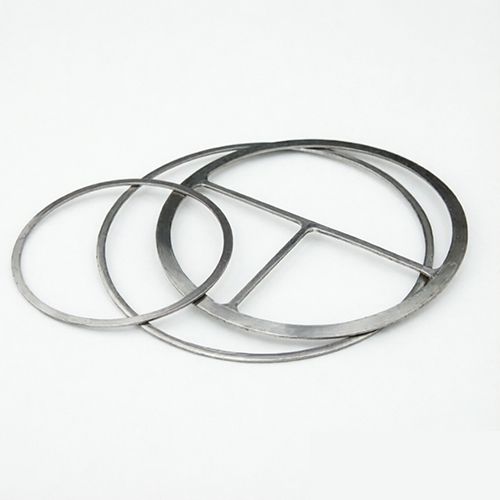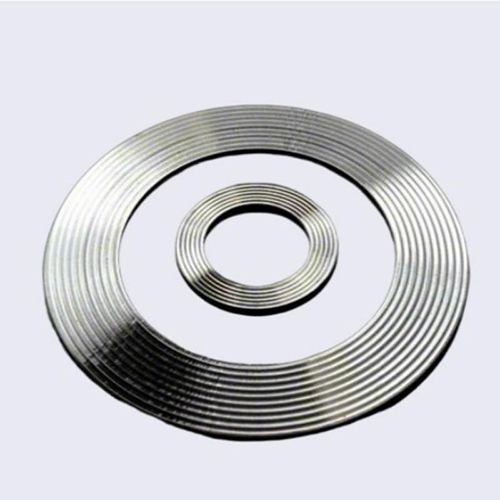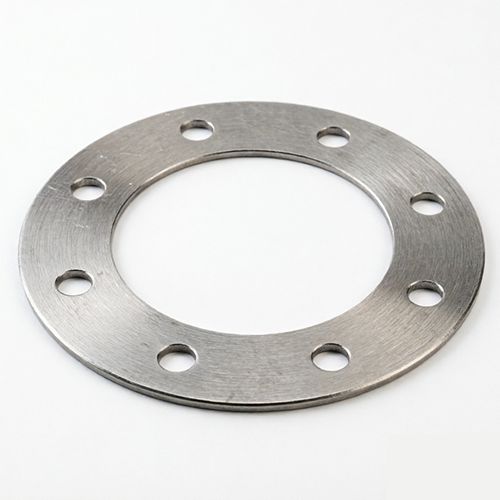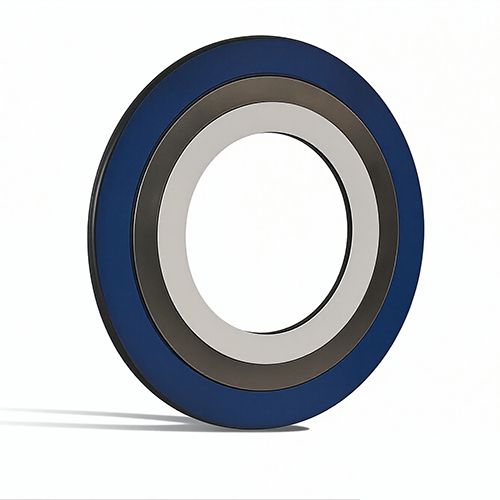

When a maintenance team is ready to close a critical flange, the question that often stops the job is simple: What torque values are recommended for Kammprofile metal gaskets? The answer is not a single number copied from a catalog, because a Kammprofile gasket is a precision sealing system: corrugated metal core, soft sealing element, and often outer and inner rings. Torque must create enough gasket stress for seating and operation without crushing the sealing element or overloading bolts. For procurement teams, the risk is real—undocumented torque can cause leaks, rework, delayed startup, and costly downtime. Ningbo Kaxite Sealing Materials Co., Ltd. helps buyers move from guesswork to controlled installation by matching Kammprofile Metal Gaskets to flange rating, media, temperature, bolt size, lubrication, and bolting procedure. In most plants, the practical recommendation is to calculate bolt load from the required gasket stress, convert bolt load to torque with a validated friction factor, and confirm the value with the gasket manufacturer. This guide gives starting-point torque tables, field checks, and Q&A for common Kammprofile metal gasket applications, so your team can specify, purchase, and install with confidence.
Pain scenario: A buyer orders Kammprofile metal gaskets for a high-temperature line, but the site crew uses a torque value remembered from a spiral wound gasket job. At startup, the flange sweats, the bolt load scatters, and the maintenance team loses a shift chasing a leak that could have been avoided.
Solution: Treat the Kammprofile gasket as an engineered joint. The corrugated metal core concentrates load on the sealing element, so the required bolt load must be high enough to seat the gasket and stable enough to resist pressure and thermal cycling. The table below gives practical starting parameters for review, not a substitute for project calculation.
| Parameter | Typical starting point | Procurement action |
|---|---|---|
| Gasket seating stress, graphite sealing element | 100–150 MPa, project-specific | Confirm with Kaxite using flange, media, and temperature data |
| Gasket operating stress | 50–80 MPa, project-specific | Check pressure class and thermal cycling |
| Bolt preload target | 30–50% of bolt yield, subject to calculation | Verify bolt grade, root area, and washers |
| Friction factor, lubricated fasteners | K = 0.12–0.18 | Use the documented lubricant K factor |
| Flange standard | ASME B16.5, EN 1092, or project standard | Match gasket dimensions, ring type, and surface finish |
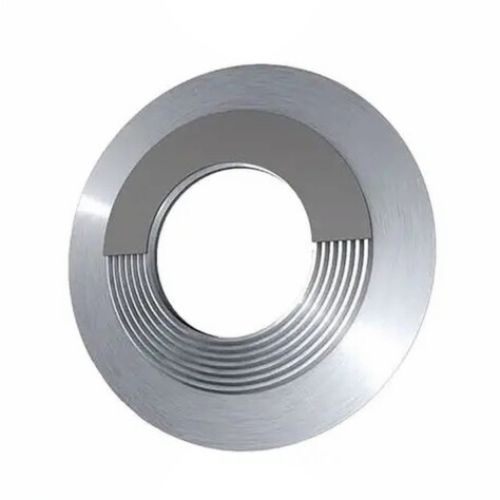
Pain scenario: Three suppliers send three different torque numbers. The purchasing team cannot tell whether the difference comes from bolt size, lubrication, gasket stress, or a simple copy-paste error.
Solution: Use a transparent starting point. The table below estimates lubricated torque for common metric bolts at a target bolt stress of 300 MPa and K = 0.16. Confirm the final value with Ningbo Kaxite Sealing Materials Co., Ltd. and the responsible engineer before tightening production flanges.
| Bolt size | Root area (mm²) | Target bolt stress (MPa) | Estimated lubricated torque (N·m) |
|---|---|---|---|
| M14 | 115 | 300 | 77 |
| M16 | 157 | 300 | 121 |
| M20 | 245 | 300 | 235 |
| M24 | 353 | 300 | 407 |
| M27 | 459 | 300 | 595 |
| M30 | 561 | 300 | 808 |
These figures are illustrative. A change in bolt grade, lubricant, washer, thread condition, or gasket sealing element can move the correct torque up or down. For procurement, the safest path is to request a torque recommendation with the gasket quotation and keep that document with the purchase order.
Pain scenario: A planner asks for “the torque for Kammprofile gaskets” without sharing gasket width, ring type, bolt grade, or line pressure. The answer becomes a guess, and the flange becomes the test bench.
Solution: Work from bolt load and gasket stress. The torque value is the last step, not the first. Use the relationship below to check supplier recommendations and to prepare a clear request for Ningbo Kaxite Sealing Materials Co., Ltd.
| Calculation item | Formula | Practical note |
|---|---|---|
| Bolt load | F = A × σ | A is bolt root area; σ is target bolt stress |
| Torque | T = K × F × d | d is nominal bolt diameter in meters; K is friction factor |
| Total gasket load | F_total = number of bolts × F | Check tightening sequence and load distribution |
| Gasket stress | σg = F_total ÷ contact area | Compare with the gasket manufacturer’s seating and operating stress |
This method helps buyers compare quotations fairly. A low gasket price can become expensive if the supplied gasket needs an unclear bolt load, unusual installation force, or a rework visit. Kaxite supports buyers by reviewing gasket geometry, sealing element, and bolting data together.
Question: What torque values are recommended for Kammprofile metal gaskets?
Answer: There is no single universal torque value. A practical starting point is to define the required gasket stress, calculate bolt load from bolt root area and target bolt stress, then convert bolt load to torque using a validated friction factor. For many lubricated bolted joints, K = 0.12–0.18 is a useful review range, but the final torque must match the actual gasket, bolt grade, lubricant, flange, and service condition. Ningbo Kaxite Sealing Materials Co., Ltd. can review your Kammprofile gasket dimensions and application data to help set a documented torque target.
Pain scenario: The gaskets arrive on time, but the bolts are dry on one flange, lubricated on another, and tightened by feel on a third. The buyer owns the supply problem even though the installation variables changed after delivery.
Solution: Add a short technical checklist to the purchase order and the installation pack. It protects the schedule and gives the site crew a clear reference.
| Check item | Why it matters | Kaxite support |
|---|---|---|
| Gasket dimensions and ring type | Contact area changes gasket stress | Drawing and dimensional review |
| Bolt grade and root area | Wrong area changes torque calculation | Bolt data check |
| Lubricant and thread condition | K factor controls torque scatter | Installation guidance |
| Flange surface finish | Poor finish can create a leak path | Specification review |
| Tightening pattern and calibration | Uniform load reduces leak risk | Procedure reference |
Question: How do I convert bolt load to torque for a Kammprofile gasket?
Answer: Use T = K × F × d, where T is torque, K is the friction factor, F is bolt load, and d is nominal bolt diameter in meters. First calculate F from bolt root area and target bolt stress. Then confirm that the total bolt load produces the required gasket stress across the Kammprofile sealing element. Because K changes with lubrication, plating, thread condition, and washers, document the assumed K factor and verify it against the actual installation procedure. Kaxite helps procurement teams connect gasket selection with bolt load and torque so the supplied product and the site procedure point to the same target.
Pain scenario: A flange passes hydrotest, then leaks after the first thermal cycle. The team reviews pressure, temperature, and gasket material, but the real cause is a torque procedure that was never controlled.
Solution: Remove avoidable variables. Use one documented torque method, one lubricant, calibrated tools, and a clear tightening sequence. The table below shows the mistakes buyers and site teams most often report.
| Mistake | Consequence | Correct action |
|---|---|---|
| Copying torque from another gasket type | Underloading or overloading the Kammprofile element | Calculate from gasket stress and bolt load |
| Mixing dry and lubricated bolts | Wide bolt load scatter | Use one documented lubricant and K factor |
| Ignoring thermal cycling | Bolt relaxation and leakage | Plan re-torque checks where required |
| Overcompressing a soft sealing element | Element damage and reduced recovery | Use the manufacturer’s seating stress guidance |
| Using an uncalibrated wrench | Unknown torque error | Calibrate tools before critical joints |
Pain scenario: A procurement officer needs Kammprofile metal gaskets for a shutdown, but the data sheet is incomplete, the flange drawing is old, and the site engineer wants a torque answer before the order can be released.
Solution: Ningbo Kaxite Sealing Materials Co., Ltd. combines gasket manufacturing with practical application review. The company supplies Kammprofile metal gaskets with graphite or PTFE sealing elements, inner and outer rings, custom dimensions, and documentation support for flange joints. Buyers can share service media, temperature, pressure, bolt grade, lubricant, and flange standard; Kaxite then helps align gasket geometry, gasket stress, bolt load, and installation guidance. This reduces the gap between a purchased part and a reliable sealed joint.
| Buyer need | Kaxite response | Result |
|---|---|---|
| Unclear torque target | Review gasket stress and bolting data | Documented installation starting point |
| Custom flange dimensions | Dimensional and drawing review | Better fit and fewer site surprises |
| Mixed material service | Sealing element and ring selection support | Practical material match |
| Shutdown schedule pressure | Responsive quotation and supply coordination | Clearer planning for procurement |
Ningbo Kaxite Sealing Materials Co., Ltd. supplies Kammprofile metal gaskets, metal jacketed gaskets, spiral wound gaskets, and sealing components for demanding flange service. The company supports procurement teams with material selection, dimensional review, torque guidance, documentation, and responsive quotations. Visit https://www.metal-gaskets.com or email [email protected] to discuss your Kammprofile gasket torque requirements and receive a practical, application-specific recommendation.
Scientific papers
Abid, M., and Nash, D. H., 2003, A parametric study of metal-to-metal contact flanges with gaskets, Proceedings of the Institution of Mechanical Engineers, Part E: Journal of Process Mechanical Engineering, 217(4).
Abid, M., and Nash, D. H., 2004, The effect of gasket material on the performance of bolted flange joints, Journal of Pressure Vessel Technology, 126(3).
Bouzid, A. H., and Nechache, A., 2005, The effect of gasket creep-relaxation on the leakage performance of bolted flange joints, Journal of Pressure Vessel Technology, 127(2).
Nechache, A., and Bouzid, A. H., 2007, Creep analysis of bolted flange joints, International Journal of Pressure Vessels and Piping, 84(3).
Fukuoka, T., and Takaki, T., 2003, Elastic plastic finite element analysis of bolted joint during tightening process, Journal of Mechanical Design, 125(4).
Nassar, S. A., and Yang, X., 2009, A mathematical model for vibration-induced loosening of preloaded threaded fasteners, Journal of Vibration and Acoustics, 131(2).
Croccolo, D., De Agostinis, M., and Vincenzi, N., 2011, Failure analysis of bolted joints: Effect of friction coefficients in torque-preloading relationship, Engineering Failure Analysis, 18(1).
Alkatan, F., Stephan, P., Daidie, A., and Guillot, J., 2007, Equivalent axial stiffness of various components in bolted joints subjected to axial loading, Finite Elements in Analysis and Design, 43(8).
Zhou, J., and Chen, Z., 2018, Leakage analysis of bolted flange joints with metal gaskets, International Journal of Pressure Vessels and Piping, 165.
Wang, Y., and Li, L., 2020, Torque control and sealing performance of Kammprofile gaskets in high-temperature flanges, Journal of Pressure Vessel Technology, 142(5).